
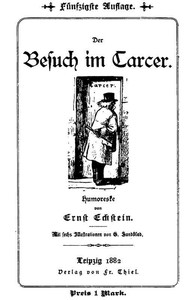
Der Besuch im Carcer. by Ernst Eckstein
First published in 1883, Ernst Eckstein's Der Besuch im Carcer (The Visit to the Prison) is a gripping little novel that feels far more modern than its vintage suggests. Set in a German university town, it follows Max Borck, a well-meaning but sheltered law student. His life is all lectures and casual fun until a friend's dare leads him to tour the local prison, the Carcer. He thinks it will be a grim but fascinating field trip.
The Story
Inside the prison, Max is drawn to a dignified, older inmate named Raban. During their conversation, Raban reveals he is serving time for a murder he insists he did not commit. He spins a tale of lost love, a bitter rivalry, and a fatal duel from decades past. Max, moved by the man's conviction and eloquence, is hooked. He promises to look into the case. What starts as a student's project quickly spirals into a dangerous investigation. Max digs through old court records and tracks down aging witnesses, uncovering inconsistencies and hints of a cover-up. He soon realizes that challenging the official story means making enemies of influential people who have built their reputations on its truth. His academic curiosity becomes a fight for justice, putting his own future and safety on the line.
Why You Should Read It
What I loved most is how personal the stakes feel. This isn't a sweeping epic about kings and battles; it's about a regular guy who sticks his nose where it doesn't belong and can't pull it back out. Max's transformation from a casual visitor to a determined activist is compelling. Eckstein also does a fantastic job building tension. Every interview, every discovered document, feels like a step closer to both the truth and real danger. The setting feels authentic without being stuffy—you get the rigid social hierarchies and formalities of the time, but the core emotions of doubt, courage, and obsession are timeless.
Final Verdict
Der Besuch im Carcer is a hidden gem for readers who enjoy historical fiction with a mystery-thriller heart. It's perfect for anyone who likes a 'cold case' story, or tales where an underdog takes on a rigid system. If you think 19th-century novels are all slow burns and dense prose, this one might change your mind—it's sharp, focused, and really hard to put down. Just be warned: you'll finish it and immediately want to know why Ernst Eckstein isn't a more famous name today.
This is a copyright-free edition. Use this text in your own projects freely.
Charles Miller
1 month agoThe balance between academic rigor and readability is perfect.
Kimberly Johnson
8 months agoI appreciate the objective tone and the evidence-based approach.
William Thompson
2 months agoBefore I started my latest project, I read this and the breakdown of complex theories into digestible segments is masterfully done. It cleared up a lot of the confusion I had previously.
Mary Thomas
1 year agoI have to admit, the storytelling feels authentic and emotionally grounded. Highly recommended.





William Williams
7 months agoRight from the opening paragraph, the concise summaries at the end of each section are a lifesaver. Top-tier content that deserves more recognition.