
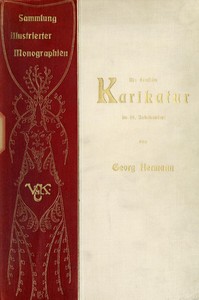
Die deutsche Karikatur im 19. Jahrhundert by Georg Hermann
Georg Hermann's Die deutsche Karikatur im 19. Jahrhundert is a guided tour through a century of German history, but instead of statues and battlefields, the sights are witty, biting, and sometimes outrageous cartoons. Hermann gathers these images from newspapers, pamphlets, and magazines, showing us how artists used their pens to comment on everything from the Napoleonic Wars and the 1848 revolutions to the rise of Bismarck and the birth of modern industry.
The Story
There isn't a traditional plot. The 'story' is the evolution of German society itself, told through satire. Hermann organizes the cartoons thematically and chronologically. We see how early caricatures often targeted Napoleon as a greedy monster, then later how they mocked the fragmented German states and their petty princes. The book hits its stride showing the explosive growth of satire during the revolutionary fervor of 1848, when censorship briefly lifted. Finally, it explores the more polished, but still critical, cartoons of the unified German Empire. Each image is a little story, and Hermann provides the context so we get the joke—and understand why it was dangerous to make.
Why You Should Read It
This book makes history feel immediate. Reading official documents from the 19th century can be stiff, but a cartoon of Bismarck as a cunning puppeteer or a fat capitalist squeezing workers says it all in a glance. Hermann isn't just a curator; his commentary reveals his own deep connection to this art form. You sense his admiration for the courage of these artists and his belief in satire as a vital check on power. It’s a reminder that people have always used humor to cope with and challenge their world. The cartoons are hilarious, shocking, and surprisingly modern in their concerns.
Final Verdict
Perfect for history buffs who want a fresh perspective, art lovers interested in popular culture, and anyone who enjoys political satire today. You'll see the roots of modern editorial cartoons and meme culture right here. It’s not a quick, breezy read—some historical knowledge helps—but it’s incredibly rewarding. You come away feeling like you’ve had a coffee with a clever friend from the past, gossiping about the headlines of their day.
Legal analysis indicates this work is in the public domain. Knowledge should be free and accessible.
James Miller
7 months agoAfter finishing this book, the arguments are well-supported by credible references. Definitely a 5-star read.
Thomas Scott
2 years agoFrom the very first page, the arguments are well-supported by credible references. Truly inspiring.
Brian Walker
1 year agoI came across this while browsing and the content flows smoothly from one chapter to the next. A true masterpiece.
Kenneth Ramirez
1 year agoGreat read!





Mary White
2 years agoI wanted to compare this perspective with traditional views, the attention to detail regarding the core terminology is flawless. This is a solid reference for both beginners and experts.