
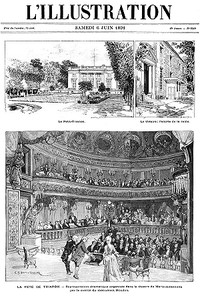
L'Illustration, No. 2519, 6 Juin 1891 by Various
Forget everything you know about modern magazines. L'Illustration, No. 2519 isn't something you skim while waiting in line. It's a hefty, beautifully printed artifact from a world on the cusp of the 20th century. Published on June 6, 1891, this weekly periodical was a primary source of news, culture, and art for the French bourgeoisie. Reading it today is less about following a linear story and more about immersing yourself in the rhythm of a specific week in history.
The Story
There's no single narrative. Instead, the 'plot' is the collective consciousness of 1891. The issue opens with a grave, illustrated account of a coal mine explosion in Germany, a stark reminder of the human cost of industrial progress. This is immediately contrasted with lighter fare: society gossip from Parisian salons, a review of a new play, and elegant advertisements for champagne and chocolates. You'll find a serialized adventure novel, scientific articles about photography, and detailed engravings of everything from a new naval vessel to the latest hat styles. It's a chaotic, wonderful jumble of the serious and the frivolous, all presented with equal importance.
Why You Should Read It
This is where the magic happens. The value isn't in any one article, but in the juxtaposition. Seeing a technical diagram for an 'electric railway' next to a report on a traditional horse show perfectly captures a society in transition. The political cartoons are sharp and witty, offering a glimpse into the anxieties of the era. The fashion plates and product ads show what 'the good life' looked like. It makes history feel immediate and messy, not cleaned up and summarized in a textbook. You get a sense of the daily noise people lived with—the tragedies, the innovations, the simple pleasures.
Final Verdict
This isn't for someone looking for a page-turning thriller. It's perfect for history buffs who want to move beyond dates and treaties, for writers seeking authentic period detail, or for any curious reader with a love for ephemera and a sense of wonder about the past. Think of it as a curated museum exhibit you can hold in your hands. You dip in and out, make connections, and come away with a richer, more textured understanding of a moment in time. A truly unique and rewarding experience.
This content is free to share and distribute. Feel free to use it for personal or commercial purposes.
Susan Martin
10 months agoGreat value and very well written.
Richard Lopez
2 months agoI've been looking for a reliable source on this topic, and the author clearly has a deep mastery of the subject matter. This should be on the reading list of every serious professional.
Elizabeth Smith
1 year agoThe information is current and very relevant to today's needs.
Kimberly Rodriguez
9 months agoThe digital formatting makes it very easy to navigate.





Charles Harris
1 year agoI stumbled upon this title during my weekend research and the step-by-step breakdown of the methodology is extremely helpful for students. The price-to-value ratio here is simply unbeatable.