
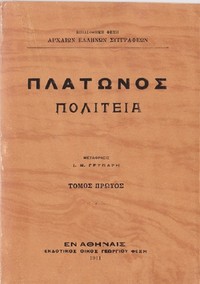
Πολιτεία, Τόμος 1 by Plato
Let's set the scene. Imagine you're at a friendly gathering in ancient Athens. The host, an older gentleman named Cephalus, is chatting with the philosopher Socrates about getting older and living a good life. The talk naturally turns to a big question: What is justice? Cephalus offers a simple, practical definition—being honest and returning what you owe. His son, Polemarchus, jumps in and tweaks it: justice is helping friends and harming enemies.
The Story
Just when you think they might settle on an answer, the sophist Thrasymachus interrupts. He's had enough of the polite chat. He declares that all this talk about morality is nonsense. In his view, 'justice' is simply the advantage of the stronger party. Rulers make laws that benefit themselves, and the weaker citizens obey. For him, true success comes from ignoring conventional justice and looking out for your own interests. The rest of the book is Socrates engaging Thrasymachus in a fierce back-and-forth. Socrates doesn't give speeches; he asks question after question, slowly pulling apart Thrasymachus's argument. He compares a ruler to a doctor or a ship's captain, whose true skill is to benefit those in their care, not themselves. By the end of Book 1, Thrasymachus is frustrated and Socrates admits they haven't found a solid definition of justice yet. The stage is set for the deeper exploration that follows in the rest of The Republic.
Why You Should Read It
Don't let the age scare you. This isn't a dusty artifact; it's a living, breathing argument. The character of Thrasymachus is fantastic. You can almost hear him scoffing and see him getting red-faced as Socrates corners him. He represents that voice we all know—the one that says, 'Wake up, the world is run by selfish people, and the rules are a scam.' Reading Socrates calmly challenge that cynicism is incredibly satisfying. It makes you examine your own assumptions about power, fairness, and why we choose to be good even when no one is watching. The dialogue format pulls you in. You're not being lectured; you're witnessing a clash of ideas in real time.
Final Verdict
This book is perfect for anyone who loves a good debate, enjoys political podcasts, or has ever gotten into a heated discussion about 'how the world really works.' It's also a great, manageable entry point into philosophy. You don't need a degree to understand it; you just need to be curious. If you find the first chapter tough, push through to Thrasymachus's entrance—that's when the sparks really start to fly. Fair warning: you'll finish Book 1 with more questions than answers, but that's exactly the point. It's an invitation to keep thinking, which is the highest praise I can give any book.
This masterpiece is free from copyright limitations. It serves as a testament to our shared literary heritage.
Elizabeth Thompson
1 year agoI came across this while browsing and the pacing is just right, keeping you engaged. Absolutely essential reading.
Noah Thomas
1 year agoFive stars!
Daniel Young
7 months agoA bit long but worth it.
Susan Jones
1 year agoPerfect.

William Martin
1 year agoGreat read!