1

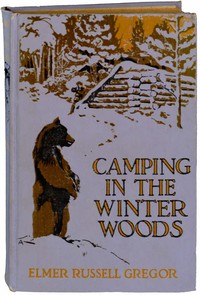
Camping in the Winter Woods: Adventures of Two Boys in the Maine Woods — Story, Setting & Ideas
(0 User reviews)
717
Project Gutenberg
2020
Not confirmed
Teenage boys -- Juvenile fiction; Camping -- Juvenile fiction; Winter -- Juvenile fiction; Maine -- Juvenile fiction; Hunting -- Juvenile fiction
Readers of public-domain and historical texts
Project Gutenberg digital edition
en
Edition facts
Words
81,216
Reading time
354 min
Text sections
31
The catalog record for Camping in the Winter Woods: Adventures of Two Boys in the Maine Woods — Story, Setting & Ideas provides practical reading context through 81,216 words, 5 hr 54 min estimated reading time, and 31 detected text sections.
The text analysis averages about 16.7 words per sentence, while the detected sections provide another way to judge how the source is divided.
Project Gutenberg metadata also associates the work with “Teenage boys -- Juvenile fiction,” connecting these edition facts with the source record’s subject description.
Source:
Project Gutenberg record #63873
An editorial note examining Elmer Russell Gregor's word choices, dialogue patterns, and descriptive techniques in this 1912 boys' adventure novel set in the Maine woods during winter.
Read the complete public-domain text at its original source.
Read on Project GutenbergElmer Russell Gregor opens Camping in the Winter Woods with a sensory rush: the two boy protagonists step from a train into “fragrant, pine-laden air” that immediately establishes the Maine setting. The author’s diction throughout leans toward the practical and specific—words like “trap,” “pelt,” “bait,” and “scent” recur with the precision of a field guide. Gregor’s dialogue often serves to convey technical information, as when the trapper Bill explains the difference between “boxing” a pelt (used for foxes) and the “open” style for raccoons, beavers, and bears. This blend of narrative and instruction shapes the reading experience.
Dialogue as Information Delivery
Gregor frequently uses dialogue to pass along woodcraft knowledge. When Ed asks why Bill doesn’t shoot trapped foxes, Bill replies, “No, indeed; that would injure the fur and lose me many dollars.” The exchange feels less like natural conversation and more like a lesson embedded in the story. Similarly, the boys learn about muskrat breathing under ice through Bill’s explanation: the animals “rise and expel their breath against the ice,” then “suck it back into his lungs.” Gregor’s characters speak in declarative, instructive sentences, rarely expressing doubt or emotion. This technique keeps the plot moving while educating the reader, but it also flattens the characters into mouthpieces for outdoor lore.
Descriptive Precision in Action Scenes
Gregor’s descriptions of physical action are methodical and step-by-step. When Bill skins a fox, the text follows each cut: “He cut a slit down the inside of each hind leg to the base of the tail. Next he inserted the knife-blade beneath the cartilage of the tail and severed it from the body.” The prose mimics the trapper’s deliberate movements, giving the reader a clear mental image. In the lynx trap scene, details like “pieces of broken sticks, patches of gray fur, and the marks of a bloody footprint” build a vivid aftermath without melodrama. Gregor prefers concrete nouns and active verbs over emotional language, which suits the survivalist subject matter but can feel clinical.
Recurring Patterns in Setting and Structure
The narrative follows a predictable rhythm: the boys move through a landscape, encounter a new animal or natural phenomenon, and receive an explanation from Bill. Swamps, ponds, and forest clearings appear repeatedly, each described with similar attention to snow cover and animal signs. Gregor often notes the names of places—Muskrat Pond, for instance—and ties them to observable features. The structure of each chapter mirrors this pattern: a journey, a discovery, a lesson. While this repetition reinforces the instructional tone, it also limits narrative surprise. The excerpts show little variation in pacing; even a “fierce struggle” with a lynx is recounted in the same measured cadence as a routine trap check.
Voice and the Absence of Interiority
Gregor’s third-person narrator stays close to the boys’ actions but rarely enters their thoughts. When George says, “Gracious, I’ll bet he was mad!” after seeing the lynx’s struggle, the exclamation is the closest the text comes to expressing emotion. The narrator reports that the boys “half expected to hear the weird baying of the wild dogs,” but does not explore their fear. This external focus keeps the story brisk and objective, aligning with the book’s apparent purpose as an adventure-education hybrid. Readers interested in psychological depth will find little; those seeking detailed depictions of early twentieth-century trapping and winter survival will find much.
Gregor’s authorial choices—instructional dialogue, precise action description, repetitive structure, and external narration—create a book that teaches as much as it entertains. Readers should approach Camping in the Winter Woods as a period piece that values practical knowledge over character development. The excerpts suggest that the novel’s strength lies in its specific, unadorned rendering of woodsman skills, not in plot or emotional arc.
There’s something about Gregor’s winter woods—the hush of snow, the boys’ quiet resourcefulness—that drifts back to me whenever I recall the wide-open feeling of the prairie journey in The Bobbsey Twins in the Great West — Inside the Classic. Both carry that same patient trust in a landscape, unhurried, a little lonely, but glad for company.
There are no reviews for this eBook.
There are no comments for this eBook.
Reader reflection
Record your reading impressions
A brief reflection can help important ideas stay with you longer.
Your progress
0
/
10
2
What was your overall reaction to the book?
3
Would you recommend this book to another reader?
4
Did the language feel accessible?
5
How well did it match your expectations?
6
Would a second reading be valuable?
7
What did you appreciate most?
8
Did any part of the book stay with you emotionally?
9
What changed or sharpened your thinking?
10