
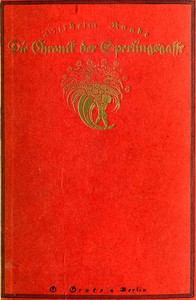
Die Chronik der Sperlingsgasse by Wilhelm Raabe
Wilhelm Raabe’s first novel, published in 1857, feels like a gentle, meandering walk down a memory lane—quite literally. It’s told through the journal of Johannes Wacholder, an aging man who lives on a quiet, forgotten street in Berlin called Sperlingsgasse. With no grand plot to drive things forward, the book unfolds as Johannes writes about his present observations and, more importantly, his past.
The Story
Johannes sits at his window, watching the world go by. As he writes, he recalls the lives that have touched his own and the history of the lane itself. We don't get a single, linear story. Instead, we get a collection of moments and portraits. We meet the various residents who have come and gone: the young student full of dreams, the kind-hearted shopkeeper, the tragic figures, and the everyday folks just trying to get by. Their joys, failures, loves, and losses are all recorded in Johannes's chronicle. The 'action' is in the accumulation of these small, human details, painting a complete picture of a community across time, all filtered through the nostalgic, sometimes melancholic, lens of an old man remembering.
Why You Should Read It
This book won’t grab you by the collar, but it will slowly wrap you in a blanket of atmosphere. Its power is in its quietness. Raabe creates an incredible sense of place. Sperlingsgasse becomes a character itself—a witness to lives lived in full view of neighbors. I found myself completely disarmed by its lack of pretension. It’s a book about paying attention, about how history isn't just made by kings and generals, but by the baker, the widow next door, and the children playing in the street. Johannes is a wonderful guide: thoughtful, a bit sad, but deeply compassionate. Reading it feels intimate, like you’ve been given a secret key to a world that’s both specific and universally relatable.
Final Verdict
This is a perfect book for a rainy afternoon or when you want to slow down. It’s for readers who love character studies and rich atmosphere over fast-paced plots. If you enjoy classic authors who focus on the interior lives of ordinary people—think a German counterpart to some of Dickens's quieter moments—you’ll appreciate Raabe’s warmth and insight. It’s a beautiful, contemplative look at how we are all part of a larger, ongoing story, written one quiet life at a time.
This masterpiece is free from copyright limitations. Preserving history for future generations.
Nancy Taylor
7 months agoHaving followed this topic for years, I can say that the way the author breaks down the core concepts is remarkably clear. The price-to-value ratio here is simply unbeatable.
Deborah Torres
7 months agoThe formatting on this digital edition is flawless.
Ava Hernandez
9 months agoI came across this while browsing and the arguments are well-supported by credible references. I will read more from this author.
Matthew Smith
4 months agoAmazing book.





Christopher Lee
10 months agoI've been looking for a reliable source on this topic, and the author doesn't just scratch the surface but goes into meaningful detail. I’ll definitely be revisiting some of these chapters again soon.