
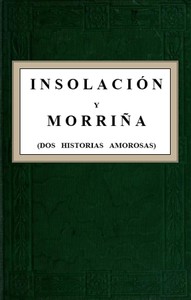
Insolación y Morriña (Dos historias amorosas) by condesa de Emilia Pardo Bazán
First published in 1889, Insolación y Morriña (which translates to 'Sunstroke and Homesickness') is actually two separate novellas bound by the theme of love gone a bit sideways. While both are worth your time, 'Insolación' is the real showstopper.
The Story
'Insolación' follows Asís, a young widow from rainy Galicia, who is spending a stifling summer in Madrid. At a lively festival, she meets Pacheco, a confident Andalusian man who is immediately taken with her. What begins as a day of innocent, flirtatious adventure—eating, drinking, and talking under the relentless sun—spirals into a days-long pursuit. Pacheco won't leave her alone, and Asís, though she tells herself she's offended, can't bring herself to truly send him away. The story becomes a tense back-and-forth. Is this passion, or is it pressure? Is she a victim of his will, or is she secretly complicit in her own undoing? Bazán masterfully charts Asís's internal chaos, her dizzying mix of excitement, shame, and confusion.
Why You Should Read It
What blew me away was how modern Asís feels. She's trapped, not by locks and keys, but by the invisible cage of 'what will people think.' Bazán doesn't paint a pretty picture of romance. Instead, she gives us something raw and real: the scary thrill of wanting someone you know you shouldn't, and the agony of trying to keep up appearances while your world is tilting. Pacheco isn't a classic villain either; he's irritatingly charming, which makes the whole dynamic even more frustrating and believable. You'll spend the whole book thinking, 'Just walk away!' while completely understanding why she can't.
Final Verdict
This book is perfect for anyone who loves character-driven stories where the biggest battles happen inside someone's mind. If you're a fan of authors like Kate Chopin or Henry James, who explore the tight spaces society leaves for women, you'll find a kindred spirit in Emilia Pardo Bazán. It's also a great, digestible entry point into classic Spanish literature—no dense, hundred-page descriptions here, just sharp psychological insight. Grab it for a weekend read, and prepare to get wonderfully annoyed on Asís's behalf.
No rights are reserved for this publication. You can copy, modify, and distribute it freely.
Richard Smith
1 month agoThe information is current and very relevant to today's needs.
Donald Jones
1 year agoIt effectively synthesizes complex ideas into a coherent whole.
Paul Garcia
10 months agoClear, concise, and incredibly informative.
Mary Martin
1 year agoI appreciate the objective tone and the evidence-based approach.



Donald Smith
1 month agoThe information is current and very relevant to today's needs.