1

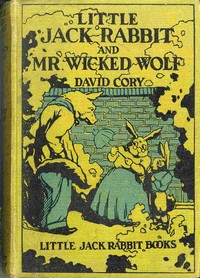
Little Jack Rabbit and Mr. Wicked Wolf — Key Ideas to Explore
(0 User reviews)
1158
Project Gutenberg
2022
Not confirmed
Christmas stories; Animals -- Juvenile fiction; Rabbits -- Juvenile fiction; Christmas -- Juvenile fiction; Wolves -- Juvenile fiction
Readers of public-domain and historical texts
Project Gutenberg digital edition
en
Edition facts
Words
19,041
Reading time
83 min
Text sections
32
This digital edition of Little Jack Rabbit and Mr. Wicked Wolf — Key Ideas to Explore is described by source-level measurements including 19,041 words, 1 hr 23 min estimated reading time, and 32 detected text sections.
The text analysis averages about 19.2 words per sentence, while the detected sections provide another way to judge how the source is divided.
Project Gutenberg metadata also associates the work with “Christmas stories,” connecting these edition facts with the source record’s subject description.
Source:
Project Gutenberg record #69200
David Cory's 1923 Christmas story uses verse interludes, a narrator who speaks directly to the reader, and a mole with a lamp to create a cozy woodland adventure where Little Jack Rabbit outwits Mr. Wicked Wolf with help from friends.
Editorial Edition Score
4.7/5
★★★★★
★★★★★
Calculated from edition completeness, EPUB availability, text structure and catalogue metadata. Not a user rating.
How this score is calculated
- Description quality20 pts
- Title & short description10 pts
- Source metadata20 pts
- Text length15 pts
- Chapters / structure15 pts
- EPUB file integrity20 pts
Total of 100 points, scaled to a 2.5-5.0 range. Editions with an empty description or a missing EPUB file are not scored.
Edition quality
Read the complete public-domain text at its original source.
Read on Project GutenbergDavid Cory opens Little Jack Rabbit and Mr. Wicked Wolf with a rhymed stanza about a fir tree chosen by birds as a Christmas tree, immediately establishing a pattern of verse woven into prose. The narrator frequently addresses the reader directly—"I declare, it has taken me almost three stories to tell you"—and inserts playful asides about characters' actions. This self-aware storytelling voice, combined with short chapters and repeated motifs like the "Thinking Cap" and the "Bunnysnobile," gives the book a distinctive oral-tale quality.
Verse as Narrative Device
Cory regularly interrupts the prose with rhymed couplets or quatrains, often spoken by characters or the narrator. Professor Jim Crow reads a poem about charity, and later a mysterious voice makes Mr. Wicked Wolf recite a promise in verse: "I never break my promise, / For fear I'll break my heart." These embedded poems serve as moral cues and plot turning points. The verse is simple, with regular meter and end rhymes, mirroring the book's intended readership. Unlike many children's books that separate songs into distinct sections, Cory integrates poetry into dialogue and narration, making it a structural element rather than decoration.
Direct Address and Reader Involvement
The narrator repeatedly breaks the fourth wall, asking "And now I suppose you are still wondering where little Jack Rabbit was" or commenting on the story's pacing: "I had to get rid of that dreadful wolf first before I could tell you." This technique creates a collaborative feel, as if the narrator is telling the tale aloud. It also allows Cory to manage suspense—revealing Jack Rabbit's hiding place only after the wolf leaves. The narrator's voice is warm and confiding, using phrases like "goodness me!" and "I declare." This direct engagement is consistent throughout the 32 text sections, reinforcing the book's origin as a read-aloud story.
Diction and Character Voice
Each animal speaks with a slightly different register. Mr. Wicked Wolf uses formal, almost polite language when frightened: "I beg your pardon... I'm sorry to trouble you." Mr. Miner Mole speaks in a practical, generous tone: "I'll give you a couple of diamonds and three rubies." Little Jack Rabbit's dialogue is earnest and childlike: "I wish I had a little cap like yours with an electric candle in it." Cory also uses descriptive verbs and similes to animate action—the wolf "went up it faster than a bricklayer with a hod of bricks on his back." Such choices keep the prose vivid without being complex.
Setting and Object Details
The story's world is built through specific, whimsical objects: the "Thinking Cap," the "Bunnysnobile," an "Old Wedding Stovepipe Hat," and a mole's mining cap with an electric light. These items are not merely mentioned but drive the plot—the mole's lamp reveals Jack Rabbit's hiding place, and the precious stones become a gift. Settings like the "old hollow stump" and "Rabbitville Trolley" are named and reused, creating a consistent geography. Cory also includes small, tangible details: Jack Rabbit's knapsack contains "a piece of apple pie and a lollypop" alongside diamonds. These concrete touches ground the fantasy in a recognizable, cozy reality.
Readers will notice how Cory balances danger and comfort: Mr. Wicked Wolf is genuinely threatening, but the narrator's reassuring tone and the quick resolutions keep the mood light. Pay attention to the way each chapter ends with a hook or a rhyme, and how objects introduced early—like the fir tree—return later. The book rewards attention to its small, repeated details and the consistent voice of its storyteller.
Some evenings, that old 1923 story of the mole’s lamp and the verse interludes stays with me—its gentle, direct voice feels like a hand held out. It made me think of The Racer boys on the prairies — A Reader’s Guide, where a similar unhurried trust in the reader lingers, like remembering a quiet path I once knew by heart.
There are no reviews for this eBook.
There are no comments for this eBook.
Reader reflection
What was your reading experience?
Capture what you thought, learned, and would like to remember.
Your progress
0
/
10
2
Was reading this book enjoyable?
3
Would you recommend this book to another reader?
4
What was the reading difficulty like?
5
Would you like to discuss this book with someone?
6
Did the book deliver what you hoped for?
7
Could you see yourself revisiting this book?
8
What was its emotional impact?
9
In one sentence, what did you learn?
10