1

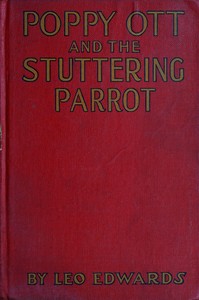
Poppy Ott and the stuttering parrot — Context and Discussion
(0 User reviews)
3075
Project Gutenberg
2025
Not confirmed
Humorous stories; Detective and mystery stories; Boys -- Juvenile fiction; Parrots -- Juvenile fiction; Illinois -- Juvenile fiction
Readers of public-domain and historical texts
Project Gutenberg digital edition
en
Edition facts
Words
48,585
Reading time
212 min
Text sections
26
This digital edition of Poppy Ott and the stuttering parrot — Context and Discussion is described by source-level measurements including 48,585 words, 3 hr 32 min estimated reading time, and 26 detected text sections.
The text analysis averages about 11.5 words per sentence, while the detected sections provide another way to judge how the source is divided.
Project Gutenberg metadata also associates the work with “Humorous stories,” connecting these edition facts with the source record’s subject description.
Source:
Project Gutenberg record #75550
Jerry Todd narrates this 1926 mystery as Poppy Ott, a new boy in Tutter, Illinois, leads the gang to solve a safe robbery and find a stuttering parrot. The story blends humor, detective work, and small-town adventure, with clues like a cigar stub and a dream about a cistern.
Read the complete public-domain text at its original source.
Read on Project GutenbergJerry Todd, the familiar narrator from Leo Edwards’ earlier series, introduces this book as “mostly about another boy”—Poppy Ott, a new kid in Tutter, Illinois. The opening chapter establishes Jerry’s voice: boastful, slangy, and full of camaraderie. He describes his gang’s leader Scoop Ellery as “the gnat’s knuckles” and Peg Shaw as a big guy who “just grew up faster.” This folksy, exaggerated style sets a playful tone, but the mystery soon tightens. By the middle excerpts, the boys are hunting an escaped black parrot and a safebreaker, using a cigar stub as a clue. The narrative shifts from casual banter to focused sleuthing, with Poppy emerging as the sharp-eyed leader.
Jerry Todd’s Narrative Voice
The story is told by Jerry Todd, who directly addresses readers: “I guess you know who I am.” His colloquial, first-person narration is packed with hyperbole and humor. He calls his town “the best small town in Illinois” and boasts about his gang’s “smart leader.” This voice creates an intimate, conversational feel, but it also shapes how clues are presented. For instance, when Jerry brags about being a “Juvenile Jupiter Detective,” his father jokingly offers a reward—a moment that blends comedy with plot setup. Readers should note that Jerry’s self-deprecating bravado often masks genuine detective work, as when he suggests the robber might be disguised. The excerpts show that Jerry’s narration is not just comic relief; it drives the mystery forward through his observations and interactions.
Clues and Deductions in the Middle Chapters
By the middle of the book, the boys are actively investigating a safe robbery. Poppy Ott obtains a cigar stub from his father, who received it from the robber. The gang then visits every store in town, but no one sells that brand—leading Poppy to deduce the robber is “an out-of-town man.” This logical step-by-step method contrasts with the earlier playful tone. Another clue emerges from a dream: Red’s aunt dreams her parrot is in a “black cistern,” which unnerves Red because he and the gang had blackened the parrot’s tail. The dream hints at a hidden location, blending superstition with practical sleuthing. These excerpts show how the mystery unfolds through tangible evidence (cigar band, dream) and the boys’ interpretations, not just luck.
The Stuttering Parrot as a MacGuffin
The title’s stuttering parrot appears only briefly in the excerpts, but it serves as a catalyst for the plot. The parrot is first captured by the gang, then escapes, and later becomes the subject of a dream that points to a cistern. Its stutter—a unique trait—is mentioned in the frontispiece caption: “It isn’t every parrot that has two servants to give it a bawth.” This suggests the parrot’s eccentricity is played for laughs. However, the bird is also linked to the robbery: the aunt’s dream about the parrot in a cistern may connect to the hidden loot or the robber’s hiding place. Readers should watch how the parrot’s stutter and its movements tie into the larger mystery, as the excerpts hint at a symbolic or practical role beyond mere comic relief.
Small-Town Setting and Gang Dynamics
Tutter, Illinois, is more than a backdrop; it shapes the investigation. The boys visit “all the stores in town” to check cigar bands, showing their intimate knowledge of local shops. The gang’s hierarchy is clear: Jerry narrates, but Poppy leads, while Scoop and Peg provide muscle and ideas. Red, the freckled boy, is the comic foil—he panics when his aunt’s dream implicates him. The adults, like Jerry’s father and mother, are supportive but skeptical, offering rewards or warnings. This small-town network means everyone knows everyone, making the out-of-town robber a plausible outsider. The excerpts capture a world where boys roam freely, solve crimes with humor, and rely on each other, creating a nostalgic yet engaging mystery.
As you read, pay attention to how the narrator’s tone shifts between comedy and detective work. The stuttering parrot may seem like a joke, but its appearances often signal key plot turns. The cigar stub and the dream are early examples of how the boys use everyday details to solve crimes. Enjoy the banter, but keep an eye on the clues—they’re woven into the dialogue and descriptions, not just the action scenes.
There’s something about the way the gang in Poppy Ott relies on quiet patience—waiting for that stuttering parrot to speak its clue—that reminds me of a different kind of waiting. I once read Christmas in Austria; or, Fritzl's friends — Background and Themes, where the season hinges on small, unhurried kindnesses rather than grand gestures. Both feel like snapshots of trust in the slow reveal.
There are no reviews for this eBook.
There are no comments for this eBook.
Reader reflection
Take a moment to reflect on this book
Create a short personal record of your experience with this book.
Your progress
0
/
10
2
How did the book work for you overall?
3
How likely are you to recommend this book?
4
Did the language feel accessible?
5
How personally connected did you feel to the book?
6
Would a second reading be valuable?
7
How would you describe its reading pace?
8
How useful were the ideas in this book?
9
What did this book teach you most?
10