1

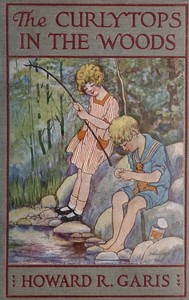
The Curlytops in the Woods; Or, Fun at the Lumber Camp — Inside the Classic
(0 User reviews)
694
Project Gutenberg
2022
Not confirmed
Adventure stories; Siblings -- Juvenile fiction; Children -- Juvenile fiction; Families -- Juvenile fiction; Lumber camps -- Juvenile fiction
Readers of public-domain and historical texts
Project Gutenberg digital edition
en
Edition facts
Words
51,856
Reading time
226 min
Text sections
31
For The Curlytops in the Woods; Or, Fun at the Lumber Camp — Inside the Classic, the stored edition analysis reports 51,856 words, 3 hr 46 min estimated reading time, and 31 detected text sections.
The text analysis averages about 12.5 words per sentence, while the detected sections provide another way to judge how the source is divided.
Project Gutenberg metadata also associates the work with “Adventure stories,” connecting these edition facts with the source record’s subject description.
Source:
Project Gutenberg record #67986
This editorial note examines the structure and recurring images in Howard R. Garis's 'The Curlytops in the Woods,' focusing on the interplay between domestic play and the lumber camp setting, the motif of sticky mishaps, and the movement from home to wilderness.
Read the complete public-domain text at its original source.
Read on Project GutenbergThe Curlytops in the Woods opens with a scene of domestic play—the children are 'playing house' on the back porch, using boxes as furniture. This imaginative transformation of ordinary objects into a piano or a stove sets a pattern for the entire book: the children constantly reframe their surroundings through pretend play. The porch, a liminal space between house and yard, serves as a staging ground for adventures that will later expand into the woods and lumber camp. Garis establishes a rhythm of small domestic crises—Trouble knocking over the 'piano,' later sitting in molasses—that echo the larger, more serious troubles the children will encounter in the wilderness.
From Porch to Woods: The Structure of Escalation
The book's structure moves in a clear arc from the familiar to the unfamiliar. The first chapters are set at home and at the father's store, where the children's mishaps are contained and quickly resolved. Trouble's molasses accident in Chapter II is a key example: it is messy but harmless, and his father handles it with mild exasperation. As the story progresses, the setting shifts to the hay wagon, a farmhouse, and finally the lumber camp. Each new location introduces greater risks and less adult supervision. The chapter titles themselves trace this progression: 'Playing House,' 'The Missing Diamond,' 'Off to Mt. Major,' 'In the Woods.' The movement is not just geographical but also structural—the early, episodic domestic scenes give way to a more continuous narrative of survival and resourcefulness in the woods.
Sticky Situations: The Recurring Image of Molasses and Mess
One of the most vivid recurring images in the excerpts is that of sticky substances causing trouble. Trouble's encounter with the molasses barrel is described in tactile detail: he sits down in a puddle, his clothing 'stuck to the messy, sweet stuff,' and his father must pull him free. This image of being stuck—physically and metaphorically—recurs later when the children find themselves adrift or lost. The molasses episode also introduces a pattern of unintended consequences: Trouble opens the spigot 'a little bit of a way' but cannot stop the flow. This small act of curiosity leads to a larger mess, a motif that repeats throughout the book as the children's innocent explorations escalate into real predicaments. The molasses, with its slow, inexorable spread, becomes a symbol for how small troubles can grow.
Voice and Dialogue: Trouble's Idiosyncratic Speech
Garis gives each child a distinct voice, but Trouble's dialogue is particularly notable for its phonetic spelling and grammatical errors. He says 'I didn't was knock over any piano,' 'Zat's funny piano,' and 'I not goin' to take any pills!' These lines not only mark his age but also create a consistent character trait: Trouble is a literal-minded toddler who often misunderstands adult language. When Janet mentions Pilgrims, Trouble announces 'Den I be a Pigwim!' This playful mishearing adds humor and also underscores the gap between the older children's understanding and his own. The dialogue serves as a structural cue—Trouble's lines often signal a shift from serious planning to comic relief, and his presence frequently precipitates the very troubles his nickname suggests.
The Lumber Camp as a New Frontier
The lumber camp represents a significant shift in setting and tone. Unlike the domestic spaces of the early chapters, the camp is a working environment with real dangers: saws, fires, and the possibility of getting lost. The catalog subject 'Lumber camps -- Juvenile fiction' indicates that this is a central element. In the excerpts, the lumberman's sudden appearance at the store foreshadows the camp's role as a place where adult work and child's play intersect. The camp is not just a backdrop but an active force in the plot—it provides new opportunities for adventure (riding on logs, exploring the woods) but also new risks. Garis uses the camp to test the children's independence, moving them from the controlled chaos of the porch to the uncontrolled wilderness of the forest.
Readers will find that the book's pleasures lie in its accumulation of small, concrete details: the feel of molasses on clothing, the sound of Trouble's mispronunciations, the sight of boxes turned into furniture. Pay attention to how Garis uses the children's own language and logic to drive the plot forward. The lumber camp is not merely a setting but a crucible where the skills learned at home—imagination, cooperation, and a tolerance for mess—are put to the test.
There’s something about the sticky mishaps in The Curlytops in the Woods that reminds me of childhood summers—messy, harmless, and somehow treasured. Reading it lately, I kept thinking of another quiet favorite, Lady Mary and Her Nurse; Or, A Peep into the Canadian Forest — Text and Context, where the woods feel just as gently watchful. Both carry that same unhurried wonder, like a path remembered.
There are no reviews for this eBook.
There are no comments for this eBook.
Reader reflection
Before you leave, reflect on the book
Use these questions to collect your thoughts before moving on.
Your progress
0
/
10
2
How did the book work for you overall?
3
Would you pass this book on to a friend?
4
Did the language feel accessible?
5
How closely did the book connect with your experience?
6
How valuable was this book for your own interests?
7
Did the book offer a fresh perspective?
8
How clear did the writing feel?
9
What changed or sharpened your thinking?
10