1

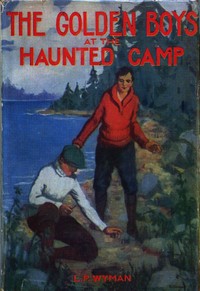
The Golden Boys at the Haunted Camp — Context and Discussion
(0 User reviews)
3933
Project Gutenberg
2020
Not confirmed
Detective and mystery stories; Brothers -- Juvenile fiction; Maine -- Juvenile fiction; Haunted places -- Juvenile fiction; Camp sites, facilities, etc. -- Juvenile fiction
Readers of public-domain and historical texts
Project Gutenberg digital edition
en
Edition facts
Words
57,268
Reading time
249 min
Text sections
17
The Golden Boys at the Haunted Camp — Context and Discussion can be approached with a clearer sense of reading commitment from its source measurements: 57,268 words, 4 hr 9 min estimated reading time, and 17 detected text sections.
The text analysis averages about 14.4 words per sentence, while the detected sections provide another way to judge how the source is divided.
Project Gutenberg metadata also associates the work with “Detective and mystery stories,” connecting these edition facts with the source record’s subject description.
Source:
Project Gutenberg record #62802
Bob and Jack Golden, cadets at a military academy, investigate a supposedly haunted camp in Maine. The excerpts show a mystery involving a hidden cave, a tied-up antagonist, and a missing brother, with dialogue-driven action and a formal military setting.
Read the complete public-domain text at its original source.
Read on Project GutenbergThe opening chapter of The Golden Boys at the Haunted Camp places readers inside a military academy dormitory at ten o'clock lights-out, where Bob Golden receives a late phone call from a friend named Rex. The friend mentions a man named Stokes who will visit with a proposition. This setup establishes a formal, regimented environment—complete with salutes, passes, and officer permissions—that contrasts with the later wilderness adventure. The catalog subjects list 'brothers,' 'Maine,' and 'haunted places,' but the excerpts reveal that the haunting is tied to a cave and a shack, not a traditional ghost story. The mystery revolves around a missing person (Jack) and a secret exit from the cave, as Bob confronts a bound man who refuses to disclose Jack's whereabouts.
Military Formalities and Family Bonds
The excerpts open with precise military protocol: Bob must request permission to leave the corridor, salute the aid, and address the officer-in-charge. This detail is not merely atmospheric—it shapes the brothers' characterization. Bob and Jack are cadets, and their dialogue includes terms like 'ten o'clock lights' and 'pass off the corridor.' The catalog subject 'brothers' is accurate, but the excerpts show that their relationship is defined by mutual concern and action. When Bob searches for Jack, he acts decisively, tying up an antagonist and searching a cave. The brothers are not passive; they are problem-solvers within a structured world. The military setting also provides a contrast to the untamed Maine woods, where the rules are different and danger is physical rather than disciplinary.
The Cave and the Unseen Threat
The catalog includes 'haunted places' and 'camp sites,' but the excerpts depict a cave that is more labyrinthine than supernatural. Bob finds a shack with three folding cots and a barred door leading into a cave. Inside, he calls for Jack but hears only echoes; the cave feels like a tomb. The bound man's grin and evasive answers suggest a hidden passage—Bob reasons that the man escaped earlier without using the door, implying a secret exit. The threat is human, not ghostly: the man reaches for a gun, and Bob knocks him out with a punch. The 'haunted' label may be a misdirection; the excerpts focus on a concrete mystery of concealed spaces and a missing brother, not apparitions or eerie phenomena.
Dialogue-Driven Suspense and Physical Action
The excerpts rely heavily on dialogue to advance the plot. Bob's interrogation of the bound man is a verbal duel: the man taunts Bob with pleasantries like 'Did you find him?' and 'I congratulate you on your reasoning,' while Bob grows frustrated. The man's refusal to explain his escape from the cave creates tension. Physical action is sudden and decisive—Bob's knockout punch is described with force and precision. The narrative voice is straightforward, with occasional interior thoughts ('Hope I haven't killed him'). The catalog subject 'detective and mystery stories' fits, but the excerpts show a mystery solved through confrontation and deduction rather than clues or forensic detail. Bob's reasoning about the cave's secret exit is the closest the excerpts come to detective work.
Readers should note that the excerpts cover only the early chapters and a later confrontation; the full novel likely expands on the cave's secrets and the brothers' resourcefulness. The military backdrop may reappear or fade as the story moves deeper into the Maine woods. Pay attention to how the author balances formal dialogue with action sequences—this tension between order and chaos is a key feature of the work.
There’s something about those Golden boys—boys who solve mysteries with a handshake and a salute—that makes me think of the Rambler Club’s Texas border, where the open country asks quieter questions. Both feel like summers I once knew, full of dust and daring. The Rambler Club on the Texas border — Key Ideas to Explore waits patiently, like an old campfire. Just a thought I wanted to leave here.
There are no reviews for this eBook.
There are no comments for this eBook.
Reader reflection
How did this book work for you?
Your answers remain private and are stored only in this browser.
Your progress
0
/
10
2
Did this book hold your interest?
3
Would you recommend this book to another reader?
4
What was the reading difficulty like?
5
How understandable was the text?
6
Would you read this book again?
7
Did it raise ideas you would like to talk about?
8
How much did the book move you?
9
What is the main idea you are taking away?
10