1

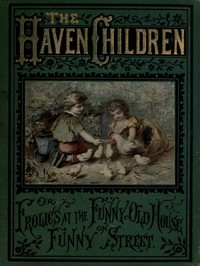
The Haven Children; or, Frolics at the Funny Old House on Funny Street — Inside the Classic
(0 User reviews)
1024
Project Gutenberg
2020
Not confirmed
Conduct of life -- Juvenile fiction; Children -- Conduct of life -- Juvenile fiction; Family -- Juvenile fiction; Yachts -- Juvenile fiction; Siblings -- Juvenile fiction; Country life -- Juvenile fiction; Aunts -- Juvenile fiction; Fourth of July -- Juvenile fiction
Readers of public-domain and historical texts
Project Gutenberg digital edition
en
Edition facts
Words
40,075
Reading time
175 min
Text sections
19
This digital edition of The Haven Children; or, Frolics at the Funny Old House on Funny Street — Inside the Classic is described by source-level measurements including 40,075 words, 2 hr 55 min estimated reading time, and 19 detected text sections.
The text analysis averages about 28.4 words per sentence, while the detected sections provide another way to judge how the source is divided.
Project Gutenberg metadata also associates the work with “Conduct of life -- Juvenile fiction,” connecting these edition facts with the source record’s subject description.
Source:
Project Gutenberg record #63162
Emilie Foster's 1875 children's novel follows the Haven siblings through summer adventures at a quirky house on Funny Street. The opening, middle, and later excerpts reveal a narrative that balances boisterous play with moral lessons, using distinct voices and episodic structure to guide young readers.
Read the complete public-domain text at its original source.
Read on Project GutenbergThe novel begins not with a narrator’s introduction but with a burst of sound: a “fearful banging” on Daisy’s door and a “shrill volley of boy’s talk” from Artie. This immediate immersion into the children’s world—complete with nicknames like “the Menagerie” and a “surprise” from Papa—establishes a tone of lively, domestic chaos. The opening chapter, “The Great Surprise,” signals that the story will unfold through action and dialogue rather than exposition.
Foster’s dedication to “a Merry Band of Nieces and Nephews” and the epigraph about “just enough shadow / To temper the glare of the sun” hint at a gentle didacticism. Readers should expect episodic adventures, each chapter a self-contained frolic, with moral lessons woven into the fun.
Voices That Carry the Story
The excerpts showcase Foster’s skill at differentiating child characters through speech. Artie’s opening taunt—“I’d be ashamed to be such a sleepy-head”—is brash and teasing, while Daisy’s later report of a French boy “who could not speak any American words but bad ones” reveals her earnest, observant nature. The younger children, like Charlie and Rosie, speak in breathless, tangled sentences: “Can’t wait, Ma’am, we’re losing time” and “a pinch of salt to put on the horse’s,—oh, dear! I mean.” These verbal tics make each child distinct and believable.
Foster also uses the narrator’s voice to comment wryly on events. When the salt hunt fails, the narrator notes that “the wary song sparrow had another engagement.” This gentle humor, directed at the children’s earnest but flawed plans, invites readers to smile at their efforts without mocking them.
Moral Lessons Through Action, Not Preaching
The excerpts embed ethical dilemmas within play. Daisy’s confrontation with Artie over the bullfrogs is a key moment: Artie is tempted by a French boy’s plan to “chop off” the frogs’ legs for supper. Daisy’s warning and Artie’s rebellious retort—“He should do as he liked, and not be tied to a girl’s apron-string”—show a conflict between peer pressure and conscience. The resolution comes not from adult intervention but from a bugle call summoning them to supper, which “rescued Artie from the Tempter’s snare.”
This pattern—temptation, near-mistake, and a natural consequence or distraction—recurs throughout the excerpts. The moral is implicit: readers see the children learn, but Foster rarely lectures. The “pinch of salt” episode, for instance, ends with the children’s flawed logic (“pile up the pinches under this plantain leaf”) gently exposed as ineffective.
Setting as a Character: The Funny House and Beyond
The title promises “Frolics at the Funny Old House on Funny Street,” but the excerpts range further: a journey to Providence, a farm, a sail on Narragansett Bay, and a Fourth of July celebration. The house itself is less described than felt through the children’s energy. The nursery is a hub of “merry clangor” and “desperate nurses,” while the garret hosts “Rainy-day Frolics.”
Outdoor settings are vividly specific: the “large tree in the next meadow,” the “duck-pond,” and the “sweet meadow” where Artie’s rebellion occurs. Foster uses these places to frame each adventure, grounding the moral lessons in physical spaces. The chapter titles—like “Tea Under the Great Elm” and “Shore Dinner and Clam Bake”—promise sensory experiences that reward attentive reading.
Structure: Episodic Yet Connected
The table of contents lists 17 chapters, each with a distinct activity: “The Fairy Feast,” “A Sail down Narragansett Bay,” “Fourth of July at Harmony Hall.” This episodic structure suits a young audience, allowing readers to dip in and out. Yet the excerpts show continuity: characters recur, and earlier events echo. Daisy’s role as “little sister-monitor” in the bullfrog episode builds on her established character from the opening.
Foster also uses recurring motifs—like the “surprise” in chapter 1 and the “salt” in chapter 10—to create small arcs. The narrative voice remains consistent, addressing readers directly (“I am sorry to say”) and offering asides that guide interpretation. This blend of independence and connection makes the book feel like a series of linked stories rather than a single plot.
First-time readers may enjoy following the children’s voices closely, noting how each sibling’s speech reveals personality and moral stance. The episodic chapters reward reading in order, as small details—like the “Menagerie” nickname or the “Funny Street” address—accumulate meaning. Foster’s light touch with moral lessons allows the frolics to speak for themselves, making this a book that entertains while it gently instructs.
Reading about the Haven children’s endless summer games, I remembered afternoons when my own house felt that large and strange. There’s a particular sweetness in those old books where play itself teaches patience, a quiet lesson tucked between bursts of laughter. Grasshopper Green and the Meadow Mice — Themes and Context stirred that same gentle ache, a reminder of how small creatures and children both find their way through mischief into understanding.
There are no reviews for this eBook.
There are no comments for this eBook.
Reader reflection
Your personal reading reflection
Build a private reading journal entry for this title.
Your progress
0
/
10
2
Did this book hold your interest?
3
Would you recommend this book to another reader?
4
How easy was the book to follow?
5
Did this book create an emotional response?
6
Would you like to discuss this book with someone?
7
Did the book offer a fresh perspective?
8
How personally connected did you feel to the book?
9
What is the main idea you are taking away?
10