1

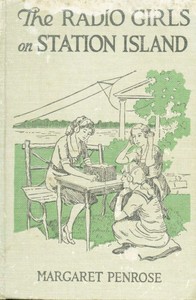
The Radio Girls on Station Island: The wireless from the steam yacht — A Reader’s Guide
(0 User reviews)
2176
Project Gutenberg
2022
Not confirmed
Islands -- Juvenile fiction; Friendship -- Juvenile fiction; Yachts -- Juvenile fiction; Mystery and detective stories; Telegraph, Wireless -- Juvenile fiction; Right of property -- Juvenile fiction
Readers of public-domain and historical texts
Project Gutenberg digital edition
en
Edition facts
Words
45,603
Reading time
199 min
Text sections
5
The source record for The Radio Girls on Station Island: The wireless from the steam yacht — A Reader’s Guide measures this digital text at 45,603 words, 3 hr 19 min estimated reading time, and 5 detected text sections.
The text analysis averages about 12.0 words per sentence, while the detected sections provide another way to judge how the source is divided.
Project Gutenberg metadata also associates the work with “Islands -- Juvenile fiction,” connecting these edition facts with the source record’s subject description.
Source:
Project Gutenberg record #69317
This editorial note examines Margaret Penrose's 1922 adventure novel through its narrative voice, pacing shifts, and use of radio technology as both plot device and metaphor, drawing on excerpts from the Project Gutenberg text.
Read the complete public-domain text at its original source.
Read on Project GutenbergThe Radio Girls on Station Island opens with Jessie Norwood bounding into her sitting room, waving an envelope and grinning—an energetic start that sets the tone for a story built on quick entrances, sudden changes, and the crackle of wireless signals. The narrative voice moves briskly, matching the girls' excitement and the novel's focus on radio communication. Penrose alternates between lively dialogue and descriptive passages, creating a rhythm that mirrors the bursts of static and clarity in early wireless transmissions.
Voice and Character Through Dialogue
The excerpts reveal a distinctive handling of character voice, especially through the younger character Henrietta. Her speech is marked by colloquialisms and self-awareness: she declares she is “a tough one” and explains that waiting on people “for love” is different from being a servant. This direct, unpolished language contrasts with the more measured tones of Jessie and Amy, who speak in complete, polite sentences. Penrose uses these differences to establish social and age hierarchies without explicit commentary. The dialogue also carries the plot forward rapidly—exclamations like “Here is another five dollars by mail” or “I hear somebody talk that I don't like” serve as both character revelation and narrative propulsion. The author avoids lengthy internal monologue, preferring external action and spoken exchange to convey emotion and conflict.
Pacing and Scene Construction
The narrative moves in short, episodic bursts. Chapter titles like “A Flare-Up,” “Into Trouble and Out,” and “A Double Race” signal quick shifts in tension. In the excerpt, the scene at the spring unfolds through a series of rapid exchanges: Henrietta hears an unwelcome voice, Belle and Sally appear, and a confrontation over ownership of the island begins—all within a few paragraphs. Penrose often cuts from dialogue to action without transition, as when Henrietta “suddenly demanded of Jessie: ‘Is this spring on a part of my land, Miss Jessie?’” This technique keeps the pace lively but can feel abrupt. The author also uses physical movement to mark scene changes: characters “bound,” “march,” “strut,” and “back away,” giving the prose a kinetic quality that suits the outdoor island setting.
Radio as Narrative Device and Metaphor
Though the excerpts do not include extended technical descriptions of radio, the wireless functions as both a plot mechanism and a structural metaphor. The opening chapter references a “radio concert” that raised money for a hospital, and the title itself promises “the wireless from the steam yacht.” In the narrative, messages travel through the air—like the five-dollar donation arriving by mail, or gossip “out of the ether” (a chapter heading). Penrose treats radio as a means of connection and disruption: it brings good news, but also unwanted voices, as when Henrietta hears Belle before she sees her. The novel’s pacing echoes the intermittent nature of early radio signals—clear bursts of dialogue followed by silence or static. This pattern suggests that the author understood wireless not just as a gadget, but as a way of structuring suspense and revelation.
Readers approaching this 1922 adventure should attend to how Penrose uses voice and pace to create a sense of immediacy. The dialogue carries much of the characterization, and the short, action-driven scenes reward attention to small shifts in tone. The radio theme is woven into the story’s fabric rather than explained at length, so noticing how messages—spoken, written, or wireless—drive the plot will enrich the reading experience.
I found myself thinking about how Margaret Penrose used the wireless on that steam yacht—not just as a gadget, but as a quiet lifeline to a world beyond the horizon. That feeling carried me back to another kind of wonder, where a camera does something similar. Tom Swift and His Wizard Camera; Or, Thrilling Adventures While Taking Moving Pictures — Context and Discussion lingers in my mind the same way, a gentle echo of inventions that shape the stories around them.
There are no reviews for this eBook.
There are no comments for this eBook.
Reader reflection
What was your reading experience?
Capture what you thought, learned, and would like to remember.
Your progress
0
/
10
2
How much did you enjoy the reading experience?
3
Is this a title you would suggest to others?
4
How much effort did this book require?
5
Could you apply anything you learned?
6
Did any part of the book feel personally relevant?
7
How strongly did the book affect you emotionally?
8
Would you read this book again?
9
In one sentence, what did you learn?
10