1

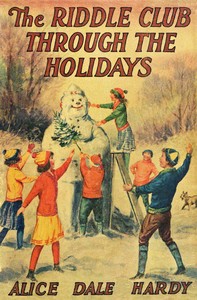
The Riddle Club through the holidays — Reading Companion
(0 User reviews)
1617
Project Gutenberg
2022
Not confirmed
Holidays -- Juvenile fiction; Thanksgiving Day -- Juvenile fiction; Christmas -- Juvenile fiction; City and town life -- Juvenile fiction; Children -- Societies and clubs -- Juvenile fiction; Winter sports -- Juvenile fiction; Halloween -- Juvenile fiction; Recreation -- Juvenile fiction; Riddles -- Juvenile fiction
Readers of public-domain and historical texts
Project Gutenberg digital edition
en
Edition facts
Words
55,613
Reading time
242 min
Text sections
36
The source record for The Riddle Club through the holidays — Reading Companion measures this digital text at 55,613 words, 4 hr 2 min estimated reading time, and 36 detected text sections.
The text analysis averages about 13.4 words per sentence, while the detected sections provide another way to judge how the source is divided.
Project Gutenberg metadata also associates the work with “Holidays -- Juvenile fiction,” connecting these edition facts with the source record’s subject description.
Source:
Project Gutenberg record #69602
This editorial note examines how the opening, middle, and later excerpts of Alice Dale Hardy's 1924 children's novel guide a first reading, focusing on the club's dynamics, seasonal activities, and the role of riddles.
Read the complete public-domain text at its original source.
Read on Project GutenbergThe Riddle Club through the holidays opens with a dispute over club dues, immediately establishing the characters' distinct voices. Fred Williamson, the treasurer, scolds Ward Larue for spending his dime on a magnifying glass instead of paying dues. Ward's defense—"I needed one"—reveals his practical, curious nature. The scene sets up a pattern: the club's activities are driven by small financial negotiations and individual interests. The narrative voice is brisk, with dialogue carrying much of the exposition. Readers are introduced to the club's president, Polly Marley, and the group's dynamic of friendly bickering. The opening chapter, titled "Looking Ahead," signals that the story will unfold through planned events and spontaneous adventures, not a single plot arc.
Seasonal Structure and Setting
The excerpts move from autumn to winter, with chapters titled "Hallowe'en Fun," "Merry Christmas," and "The Last of the Snowman." The setting is River Bend, a small town where children walk to school, go coasting on Pond's Hill, and build snowmen. The weather is described in concrete detail: "flying flakes stung their eyes and melted on their faces." The snowstorm that begins in the opening chapter continues into the coasting scene, with the narrator noting that "the flakes were larger, an indication that the storm was beginning to let up." This attention to seasonal specifics grounds the story in a recognizable winter landscape. The holidays—Halloween, Thanksgiving, Christmas—provide natural chapter breaks, but the excerpts suggest that the club's activities, not the holidays themselves, drive the narrative.
Character Dynamics Through Dialogue
The opening dialogue reveals each character's role. Fred is the responsible treasurer, concerned with rules and money. Ward is impulsive and inventive, spending his dime on a magnifying glass. Jess, Ward's sister, is practical and observant. Polly, the president, mediates. The coasting scene adds more: Margy, Fred's sister, is timid—"She could never be induced to go down the hill alone"—and complains of cold feet. Artie and Ward enjoy reckless stunts, like lying flat on a sled with Artie perched on top. The narrator notes that "Snow, argued Ward and Artie, was soft and comfortable." These small details build distinct personalities without explicit description. The dialogue is natural, with interruptions and overlapping speech, as when Polly whispers about Carrie Pepper and Mattie Helms.
The Role of Riddles and Club Identity
Despite the title, the excerpts do not feature riddles directly. The club's name is mentioned in the context of dues and a past riddle contest with the Conundrum Club, refereed by Harry Worden. The riddles themselves are not quoted, suggesting they may appear later or serve as a framing device. The club's identity is tied to problem-solving and competition, but the excerpts focus on everyday activities: coasting, sled races, and social interactions. The snowman mentioned in the subtitle—"What the Snowman Revealed"—does not appear in the provided text. Readers should expect that riddles and the snowman will become significant in later chapters, but the opening emphasizes character and setting over mystery.
Narrative Voice and Pacing
The narrator uses a straightforward, third-person style with occasional interjections like "why, that was nothing at all!" The pacing is leisurely, with scenes unfolding through dialogue and action. The coasting sequence, for example, describes each character's approach: Fred steers "deftly curving in and out," Polly is cautious, and Jess has a "sober enjoyment." The narrator also includes direct speech tags like "drawled Harry Worden, lazily" to convey tone. The chapters are short (25 chapters for 55,613 words), suggesting a episodic structure. The excerpts do not include any chapter beyond the first, so the overall arc is unclear, but the style suggests a series of linked adventures rather than a single plot.
Readers approaching The Riddle Club through the holidays should pay attention to the small details of character behavior—how each child handles money, reacts to snow, or interacts with others. The riddles may be the club's official purpose, but the real interest lies in the group's dynamics and seasonal activities. The excerpts provide a clear sense of the book's tone: light, dialogue-driven, and focused on everyday adventures. The snowman and riddles are promised but not yet delivered, so the reader can look forward to how these elements will emerge from the club's ordinary routines.
Some books settle like old friends, and The Riddle Club through the holidays always reminds me of that quiet pleasure in shared secrets. Its riddles feel like doors left ajar. I often think, too, of that other rambling company, and how their borderland journeys held similar warmth. The Rambler Club on the Texas border — Key Ideas to Explore carries the same gentle spirit of comradeship, if a dustier landscape.
There are no reviews for this eBook.
There are no comments for this eBook.
Reader reflection
Before you leave, reflect on the book
Use these questions to collect your thoughts before moving on.
Your progress
0
/
10
2
How much did you enjoy the reading experience?
3
Is this a title you would suggest to others?
4
How demanding did the text feel?
5
How valuable was this book for your own interests?
6
Could you follow the author’s main argument?
7
How personally connected did you feel to the book?
8
What was its emotional impact?
9
What is the main idea you are taking away?
10