1

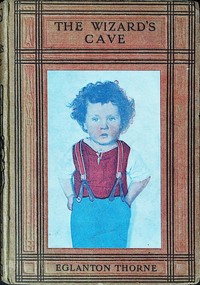
The wizard's cave — Edition Insights
(0 User reviews)
737
Project Gutenberg
2023
Not confirmed
Christian life -- Juvenile fiction; Boys -- Conduct of life -- Juvenile fiction; Brothers -- Juvenile fiction; Caves -- Juvenile fiction; Thieves -- Juvenile fiction; Cornwall (England : County) -- Juvenile fiction
Readers of public-domain and historical texts
Project Gutenberg digital edition
en
Edition facts
Words
16,736
Reading time
73 min
Text sections
2
For The wizard's cave — Edition Insights, the stored edition analysis reports 16,736 words, 1 hr 13 min estimated reading time, and 2 detected text sections.
The text analysis averages about 15.0 words per sentence, while the detected sections provide another way to judge how the source is divided.
Project Gutenberg metadata also associates the work with “Christian life -- Juvenile fiction,” connecting these edition facts with the source record’s subject description.
Source:
Project Gutenberg record #70936
This editorial note examines the structure, recurring images, and movement between scenes in Eglanton Thorne's The Wizard's Cave, focusing on how the narrative shifts from confinement to coastal exploration and suspense.
Read the complete public-domain text at its original source.
Read on Project GutenbergThe Wizard's Cave opens with a scene of confinement: two brothers, Duke and Noel, crouch by a window in a bare schoolroom, watching rain fall on a London suburb. The coach that carried their schoolmates away has just departed, leaving them stranded for the holidays. This initial image of enclosure—the grim room, the locked-in feeling—sets a pattern of movement between trapped interiors and open, dangerous exteriors that runs through the novel. The narrative quickly pivots from the schoolroom to the sea, from the boys' passive resentment to active exploration of a Cornish coast. Thorne uses these shifts in setting to mark changes in the boys' circumstances and emotional states, often pairing a constricted space with a sudden release into landscape or adventure.
From Schoolroom to Seascape
The first chapter establishes a rhythm of departure and arrival. The coach that takes the other boys home is a symbol of exclusion; the rain that traps Duke and Noel indoors mirrors their helplessness. But the narrative does not linger. Within a few pages, the brothers are transported to Cornwall, and the setting opens dramatically. The sea appears as a new element, described through the boys' fresh eyes. Thorne contrasts the dusty, scorched gardens of the London suburb with the wild coast, where the boys encounter caves, cliffs, and wreckers' lamps. This movement from the known to the unknown is not just geographical—it signals a shift from passive suffering to active curiosity. The schoolroom, with its locked drawers and matronly supervision, gives way to a landscape full of hidden passages and unexplained lights.
Recurring Images of Light and Darkness
Light sources recur as signals of danger and mystery. The wreckers' lamp in the tower, the light that Mr. Fletcher sees during the storm, and the lanterns carried by the thieves all create a visual pattern of illumination against darkness. Thorne uses these lights to mark moments of suspense: the men's conversation about the wizard's cave is punctuated by the sudden appearance of a light in the tower, which they interpret as a warning. The dog's bark and the whistle that recalls him are paired with these visual cues, reinforcing the idea that the landscape is watched. Darkness, meanwhile, conceals threats—the thieves lurk in shadows, the cave's interior is unknown. The boys' own movements often take place in half-light, as when they explore the old house or the cave itself. This interplay of light and dark gives the story a tense, atmospheric quality.
Movement Between Interiors and Exteriors
Thorne structures the narrative as a series of crossings between inside and outside. The schoolroom, the housekeeper's cosy room, the old house's unused rooms, and the cave itself are interiors that the boys enter and leave. Each interior carries a different emotional weight: the schoolroom is oppressive, the housekeeper's room is warm but temporary, the old house is mysterious, and the cave is both alluring and threatening. Exteriors—the rainy playground, the cliff path, the glen—are spaces of movement and encounter. The thieves' conversation takes place on the path, not inside the tower; the dog's pursuit happens in the open. This constant shifting prevents the story from settling into a single location and keeps the reader aware of the characters' vulnerability. The cave, as the title suggests, is the ultimate interior, but its secrets are only hinted at in the excerpts.
Suspense Through Fragmented Information
The excerpts reveal that Thorne builds suspense by withholding information. The thieves discuss the wizard's supposed powers—vanishing into the ground, surviving in a flooded cave—but these claims are presented as rumors, not facts. The reader, like the boys, must piece together what is true. The light in the tower is unexplained; the men's plans are only partially revealed. The narrative moves between the boys' perspective and the thieves' perspective, creating gaps in knowledge. For example, the reader knows that Mr. Fletcher has seen the light and the fleeing men, but the boys do not. This technique of limited viewpoint keeps the story tense. The excerpts end with Mrs. Bryden running down the path, having lost her boys—a moment of crisis that leaves the outcome uncertain. Thorne's use of short chapters and cliffhanger endings (as seen in the chapter titles) reinforces this fragmented, suspenseful structure.
Readers will find that the novel's effectiveness depends on these structural choices: the rapid movement between settings, the careful placement of light and dark, and the withholding of key information. The excerpts suggest that Thorne is less interested in detailed character psychology than in creating a series of vivid, suspenseful scenes. Pay attention to how the brothers' relationship shifts as they move from the schoolroom to the coast—their dialogue reveals differences in temperament that may become important later. The cave itself remains a mystery in these excerpts, but its presence as a goal and a threat shapes every scene.
That rainy afternoon, I kept returning to how The Wizard's Cave slowly traded its closed-in rooms for open shorelines, the damp walls giving way to salt air. It made me wonder about smaller creatures, the way they, too, move from safety to exposure. So I found myself beside Grasshopper Green and the Meadow Mice — Themes and Context, lingering over its quiet notes on courage. The rain kept falling, and that was enough.
There are no reviews for this eBook.
There are no comments for this eBook.
Reader reflection
Record your reading impressions
A brief reflection can help important ideas stay with you longer.
Your progress
0
/
10
2
How much did you enjoy the reading experience?
3
Would you pass this book on to a friend?
4
What was the reading difficulty like?
5
Did the book give you something worth debating?
6
Did the book deliver what you hoped for?
7
How understandable was the text?
8
Was the book moving at the right speed?
9
In one sentence, what did you learn?
10