1

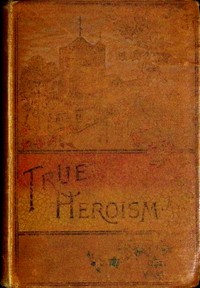
True heroism — Reading Companion
(0 User reviews)
2607
Project Gutenberg
2023
Not confirmed
Christian life -- Juvenile fiction; Children -- Conduct of life -- Juvenile fiction; Friendship -- Juvenile fiction; Voyages and travels -- Juvenile fiction; Courage -- Juvenile fiction; Heroes -- Juvenile fiction
Readers of public-domain and historical texts
Project Gutenberg digital edition
en
Edition facts
Words
25,893
Reading time
113 min
Text sections
4
True heroism — Reading Companion can be approached with a clearer sense of reading commitment from its source measurements: 25,893 words, 1 hr 53 min estimated reading time, and 4 detected text sections.
The text analysis averages about 18.0 words per sentence, while the detected sections provide another way to judge how the source is divided.
Project Gutenberg metadata also associates the work with “Christian life -- Juvenile fiction,” connecting these edition facts with the source record’s subject description.
Source:
Project Gutenberg record #71600
A.L.O.E.'s 1877 children's novel uses embedded stories of historical courage to frame a Christian moral argument, but the excerpts focus more on domestic squabbles and travel mishaps than on the heroic deeds the catalog subjects promise.
Read the complete public-domain text at its original source.
Read on Project GutenbergThe catalog subjects for True Heroism promise tales of Christian life, friendship, voyages, and courage, yet the opening chapter at Ivy Lodge dwells on rainy-day boredom, a quarrel over chess, and a broken drum. The children—Tom, Louis, Jessy, Julia, Willy, Bella—are introduced not through adventure but through petty disputes and restless complaints. The aged Mr. Presgrave enters to calm them, but the scene is domestic, not heroic. This gap between catalog promise and textual reality persists throughout the excerpts: the book’s structure embeds stories of historical bravery (Maxwell, Outram, Nesham) within a frame narrative of everyday moral trials, but the excerpts give far more space to the frame than to the embedded tales.
Catalog Subjects vs. Textual Emphasis
The catalog lists “Voyages and travels,” “Courage,” and “Heroes” as primary subjects, yet the excerpts contain no actual voyages or travel beyond a carriage ride to Ivy Lodge. The only explicit reference to a heroic figure is Tom’s boast about “Outram or Nesham” and Willy’s recollection of “Maxwell” standing fire—but these are mentioned, not narrated. The bulk of the excerpted text is devoted to the children’s ordinary conflicts: Tom and Louis nearly come to blows over a chess move; Willy cuts a hole in his drum; Bella defaces a book with paint. The catalog’s emphasis on adventure and heroism is not supported by the available text, which suggests the book may be more concerned with moral instruction in mundane settings than with thrilling exploits.
The Frame Narrative’s Moral Vocabulary
Mr. Presgrave’s advice to Percy—“Christianity has its heroes in suffering as well as in acting”—and his quotation “endure hardness as a good soldier of Jesus Christ” reveal the book’s didactic purpose. The word “hero” is redefined as a Christian virtue, not martial daring. Tom’s declaration “I’ll never be afraid of anything or anybody!” is immediately undercut by Willy’s doubt: “I’m half afraid.” The text’s moral vocabulary—fear, courage, trial, proof—is applied to small domestic tests, not grand adventures. The catalog subject “Courage” is accurate, but the excerpts show it being taught through everyday situations, not through the ship fires or bomb threats listed in the table of contents.
Incomplete Evidence for the Embedded Stories
The table of contents includes chapters titled “The Ship on Fire,” “Catherine Douglas,” “The Bomb,” “The Lady and the Serpent,” and “The Mad Dog—The Bear,” which suggest the embedded heroic tales. However, the excerpts only hint at these: Tom mentions “those famous stories that we read in the Easter holidays,” and Willy recalls “Maxwell” and “the fire.” The actual narratives are absent from the provided text. Readers expecting full accounts of historical heroism will find only references and a frame story that prioritizes the children’s reactions. The book’s structure appears to be a series of moral lessons drawn from these tales, but the excerpts do not allow us to assess how the tales are integrated or how much weight they carry.
Readers approaching True Heroism through its catalog subjects should adjust expectations: the excerpts suggest a moral frame narrative that uses brief allusions to heroic deeds to teach Christian conduct, rather than delivering sustained adventure stories. The text’s interest lies in the children’s everyday struggles with fear, boredom, and selfishness, and in Mr. Presgrave’s gentle guidance. The embedded tales may be present in the full book, but the excerpts offer only their echoes.
That rainy afternoon, True Heroism kept slipping from my hands, its squabbles and mishaps more familiar than its martyrs. What stayed with me wasn’t courage, but the quiet way boys sorted their own loyalties when the weather turned. Later, I found myself remembering that feeling while drifting through The Banner Boy Scouts Afloat; or, The Secret of Cedar Island — Key Ideas to Explore, where the same small decencies ripple outward, unannounced.
There are no reviews for this eBook.
There are no comments for this eBook.
Reader reflection
Before you leave, reflect on the book
Use these questions to collect your thoughts before moving on.
Your progress
0
/
10
2
How much did you enjoy the reading experience?
3
Would you recommend this book to another reader?
4
What was the reading difficulty like?
5
Could you apply anything you learned?
6
How closely did the book connect with your experience?
7
Is this a title worth rereading?
8
How much did the book move you?
9
In one sentence, what did you learn?
10