1

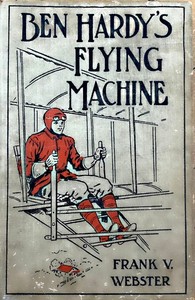
Ben Hardy's flying machine; or, Making a record for himself — Edition Insights
(0 User reviews)
315
Project Gutenberg
2022
Not confirmed
Airships -- Juvenile fiction; Aeronautics -- Juvenile fiction; Mystery fiction; Thieves -- Juvenile fiction; Airplane racing -- Juvenile fiction
Readers of public-domain and historical texts
Project Gutenberg digital edition
en
Edition facts
Words
46,044
Reading time
201 min
Text sections
33
The catalog record for Ben Hardy's flying machine; or, Making a record for himself — Edition Insights provides practical reading context through 46,044 words, 3 hr 21 min estimated reading time, and 33 detected text sections.
The text analysis averages about 12.8 words per sentence, while the detected sections provide another way to judge how the source is divided.
Project Gutenberg metadata also associates the work with “Airships -- Juvenile fiction,” connecting these edition facts with the source record’s subject description.
Source:
Project Gutenberg record #69511
In this 1911 boys' adventure, Ben Hardy's flying machine is central to a plot involving theft, sabotage, and a race against time. The excerpts reveal a focus on mechanical ingenuity and legal conflict, with the airship serving as both invention and evidence in a frame-up.
Read the complete public-domain text at its original source.
Read on Project GutenbergBen Hardy's flying machine is not merely a vehicle for aerial adventure; it is the contested object at the heart of a legal and moral struggle. The excerpts show that the story opens not with flight but with a runaway engine in an automobile factory, establishing a world where machinery is powerful and dangerous. The narrative quickly shifts to a home workshop where Ben and his father build a monoplane, only to have it dismantled by constables acting on a theft accusation. The catalog subjects list airships, aeronautics, and mystery, but the text emphasizes the invention as a target of industrial espionage: the lawyer declares the raid's true motive is 'to steal your airship inventions.'
The Machine as Evidence and Target
The excerpts depict the flying machine not in flight but as a material object subject to seizure. When constables search the Hardy workshop, they confiscate metal parts that Ben insists were made on-site, not stolen from the Saxton plant. The narrative frames the airship as both a creative achievement and a piece of evidence in a conspiracy. The lawyer's line—'they were really after the parts of that flying machine of yours'—makes explicit that the invention is the prize. This focus on the physical components of the airship, rather than on its performance, distinguishes the story from pure aviation adventure. The machine is a MacGuffin that drives the plot through theft and legal maneuvering.
Voice and Moral Certainty
The dialogue in the excerpts reveals a clear moral framework. Ben reacts to the accusation with indignation: 'It is all a plot, a base, wicked plot!' His father responds with calm trust: 'Don't worry, my son, everything will come out right.' The lawyer confirms the conspiracy, stating 'we're dealing with a bad crowd.' This pattern—outrage from the young hero, serenity from the father, and confirmation from an authority figure—establishes a world where right and wrong are unambiguous. The reader is never in doubt about Ben's innocence or Saxton's villainy. The language is direct and declarative, with characters stating their positions plainly. This moral clarity is typical of early 20th-century boys' series fiction, where the hero's integrity is never seriously questioned.
Setting and the Industrial Landscape
The story's settings are industrial and domestic, not rural or exotic. The first chapter takes place in the Saxton Automobile Works, described with specific mechanical details: 'the big steam engine of the plant had slipped the belt,' 'clouds of steam covered the boiler room like a snow bank.' The Hardy home includes a work shed where the airship is built. This grounding in workshops and factories gives the narrative a practical, hands-on feel. The excerpts do not include any flight scenes; the airship is discussed as a project under construction. The catalog subject 'airplane racing' is not evident in the provided text. Instead, the focus is on the invention as a product of labor and skill, threatened by corrupt industrial rivals. This setting aligns with the author's other works, such as 'Airship Andy' and 'Tom the Telephone Boy,' which similarly feature boy inventors and mechanics.
Readers approaching this book should expect a story where the flying machine is more often a contested object than a vehicle for aerial exploits. The excerpts suggest that the narrative momentum comes from legal threats and the recovery of stolen parts, not from races or air battles. The moral framework is straightforward, with clear heroes and villains. Those interested in early aviation fiction or in the portrayal of invention in boys' series will find the focus on workshop details and conspiracy distinctive.
Reading about Ben’s airship, I remembered my father’s workshop and the smell of oil. That feeling of a secret project, half-finished, returned with Poppy Ott and the stuttering parrot — Context and Discussion. Both stories hold that quiet ache of clues hidden in ordinary things, where a machine or a bird’s cry feels like a private language waiting to be deciphered.
There are no reviews for this eBook.
There are no comments for this eBook.
Reader reflection
What was your reading experience?
Capture what you thought, learned, and would like to remember.
Your progress
0
/
10
2
How did the book work for you overall?
3
Would you encourage someone else to read it?
4
What was the reading difficulty like?
5
Is this a title worth rereading?
6
What was its emotional impact?
7
What was the strongest part of the book?
8
Would you start a conversation about this book?
9
What is the main idea you are taking away?
10