1

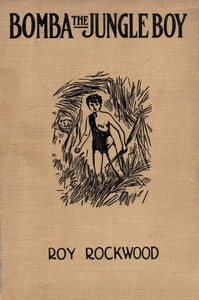
Bomba the jungle boy — A Closer Reading
(0 User reviews)
1919
Project Gutenberg
2023
Not confirmed
Orphans -- Juvenile fiction; Boys -- Juvenile fiction; Adventure and adventurers -- Juvenile fiction; South America -- Juvenile fiction; Naturalists -- Juvenile fiction; Jungles -- Juvenile fiction; Jungle survival -- Juvenile fiction; Amazon River Region -- Juvenile fiction; Identity (Psychology) -- Juvenile fiction
Readers of public-domain and historical texts
Project Gutenberg digital edition
en
Edition facts
Words
46,984
Reading time
205 min
Text sections
37
This digital edition of Bomba the jungle boy — A Closer Reading is described by source-level measurements including 46,984 words, 3 hr 25 min estimated reading time, and 37 detected text sections.
The text analysis averages about 15.2 words per sentence, while the detected sections provide another way to judge how the source is divided.
Project Gutenberg metadata also associates the work with “Orphans -- Juvenile fiction,” connecting these edition facts with the source record’s subject description.
Source:
Project Gutenberg record #70572
An editorial note on Roy Rockwood's 1926 adventure, focusing on how the narrative voice shifts between Bomba's physical prowess and his internal loneliness, and how the harmonica becomes a tool for both summoning and bewildering jungle creatures.
Editorial Edition Score
4.8/5
★★★★★
★★★★★
Calculated from edition completeness, EPUB availability, text structure and catalogue metadata. Not a user rating.
How this score is calculated
- Description quality20 pts
- Title & short description10 pts
- Source metadata20 pts
- Text length15 pts
- Chapters / structure15 pts
- EPUB file integrity20 pts
Total of 100 points, scaled to a 2.5-5.0 range. Editions with an empty description or a missing EPUB file are not scored.
Edition quality
Read the complete public-domain text at its original source.
Read on Project GutenbergThe opening chapter of Bomba the Jungle Boy establishes a protagonist who moves through the jungle with "surprising suppleness and ease," yet the narrative immediately undercuts this physical confidence by freezing him mid-step. The prose alternates between swift action and sudden stillness, a rhythm that recurs throughout the excerpts. Bomba's world is one of semi-darkness and steaming vapor, where the sun's heat is felt but its rays are blocked—a sensory detail that mirrors the boy's own obscured origins.
The story's voice is direct and episodic, with chapter titles like "A Narrow Escape" and "Playing for His Life" promising imminent danger. Yet the most striking passages are those where the action pauses, and Bomba's inner ache surfaces—a "sickness that came from nowhere" that he cannot name. This tension between external competence and internal bewilderment gives the narrative its peculiar pull.
Silence and Sound as Narrative Devices
The jungle in these excerpts is never truly quiet. Parrots scream, monkeys howl, and the undergrowth crashes. But the narrative voice pays close attention to changes in sound. When Bomba plays his harmonica, the jungle denizens who had clustered around him vanish, leaving a silence that feels more threatening than the earlier noise. The text describes this as if the animals had been "sucked down to the muddy bottom of the ygapo"—a simile that links disappearance to drowning.
Sound also becomes a weapon. In chapter XIII, Bomba uses discordant notes to bewilder a jaguar, turning the harmonica from a comfort object into a survival tool. The beast hesitates because it has "never heard that kind of sound." The narrative here leans into the idea that novelty itself can be disarming, a theme that recurs when Bomba recalls Casson's story of snake charmers. The prose does not resolve whether music truly controls animals or merely buys time, leaving the reader in the same uncertainty as Bomba.
The Boy Who Does Not Know Himself
Bomba's identity is a puzzle the text refuses to solve within these excerpts. He is an orphan, a jungle dweller, and the subject of "the old naturalist's secret" promised in the subtitle. But the narrative voice focuses less on his past than on his present confusion. When loneliness creeps over him, he cannot name the feeling—it is a "sickness" that hurts "only that mysterious part of him that he did not understand."
This internal opacity contrasts sharply with his physical competence. He moves through the jungle with dexterity, avoids vines and roots, and faces a jaguar without flinching. Yet the prose repeatedly returns to his bewilderment. The harmonica, his attempt to gather friends, only drives them away. Even Doto the monkey is suspicious. The narrative voice here is almost clinical, observing Bomba's actions without explaining his emotions, leaving the reader to infer the depth of his isolation.
Pace and the Threat of Stillness
The excerpts show a deliberate alternation between rapid movement and frozen moments. Chapter I begins with Bomba halting "as though turned to stone." Later, when the jaguar appears, he is again motionless, the harmonica still at his lips. These pauses are not lulls but points of maximum tension, where the narrative voice slows to match Bomba's held breath.
This technique extends to the prose itself. Action sequences are built from short, declarative sentences: "Bomba noted instantly the effect, and took advantage of it." But when Bomba reflects, the sentences lengthen, trailing into uncertainty. The storm in chapter XV, the vultures in chapter XIV—each threat arrives with a sudden shift in pace. The narrative never lets the reader settle, mirroring Bomba's own inability to find rest. Even the chapter titles, with their breathless phrasing ("By a Hair's Breadth," "In the Nick of Time"), promise that stillness is always temporary.
Readers will find that the book's pleasures lie less in plot mechanics than in the way Rockwood uses the jungle itself as a sounding board for Bomba's inner state. Pay attention to when the narrative slows down—those are the moments where the boy's hidden self surfaces. The harmonica, the silence of the animals, the weight of the semi-darkness: these details accumulate into a portrait of a protagonist who is both master of his environment and utterly lost within it.
Flipping back through the editorial notes on Bomba the jungle boy, I kept pausing on that quiet ache beneath the adventure. It reminded me of a sunlit afternoon spent with Uncle Wiggily on the farm — Story, Setting & Ideas, where the gentle chaos of barnyard life carries the same undercurrent of wanting to belong. Both worlds hum with a loneliness that feathers and harmonica notes can’t quite soothe.
There are no reviews for this eBook.
There are no comments for this eBook.
Reader reflection
Record your reading impressions
A brief reflection can help important ideas stay with you longer.
Your progress
0
/
10
2
Was reading this book enjoyable?
3
Would you encourage someone else to read it?
4
How demanding did the text feel?
5
Could you apply anything you learned?
6
Could you follow the author’s main argument?
7
How closely did the book connect with your experience?
8
Did this book create an emotional response?
9
In one sentence, what did you learn?
10