1

Carlota of the rancho — A Closer Reading
(0 User reviews)
424
Project Gutenberg
2024
Not confirmed
Twins -- Juvenile fiction; Siblings -- Juvenile fiction; Runaway children -- Juvenile fiction; New Mexico -- Juvenile fiction; Lawyers -- Juvenile fiction
Readers of public-domain and historical texts
Project Gutenberg digital edition
en
Edition facts
Words
61,216
Reading time
267 min
Text sections
39
The catalog record for Carlota of the rancho — A Closer Reading provides practical reading context through 61,216 words, 4 hr 27 min estimated reading time, and 39 detected text sections.
The text analysis averages about 13.7 words per sentence, while the detected sections provide another way to judge how the source is divided.
Project Gutenberg metadata also associates the work with “Twins -- Juvenile fiction,” connecting these edition facts with the source record’s subject description.
Source:
Project Gutenberg record #73565
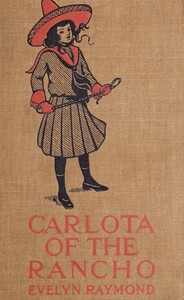
Evelyn Raymond's 1909 children's novel follows twins Carlos and Carlota as they navigate the borderlands of New Mexico and Mexico, blending Spanish and English dialogue, frontier life, and themes of family and resilience.
Read the complete public-domain text at its original source.
Read on Project GutenbergFrom its opening lines, Carlota of the Rancho establishes a playful yet precise sense of place. Carlos sprawls on the grass declaring his head in the United States and feet in Mexico, while Carlota rolls her plump body along a lime-line dividing the two countries. This borderland setting is not merely scenic; it shapes the twins' identities and the story's conflicts. Raymond's diction shifts between colloquial English and Spanish phrases, reflecting the cultural mix of the region. The children's banter—Carlota's indignation at being told girls don't have gizzards—reveals their distinct voices and sibling dynamic. The author avoids heavy exposition, letting dialogue and physical action convey character and setting.
Twin Voices and Diction
Raymond differentiates Carlos and Carlota through their speech patterns and concerns. Carlos is more adventurous and literal, while Carlota is quick-witted and emotionally attuned. When Carlota asks what is on the opposite side of the heart, Carlos guesses "gizzard," prompting her to correct him with mock seriousness: "Girls don't have gizzards, Carlos Manuel. Only chickens and geeses." This exchange shows Raymond's ear for childlike logic and the twins' affectionate teasing. Later, Carlota thinks first of others, as when she worries about her brother's safety near a train. The author uses these contrasting reactions to build distinct personalities without heavy narration.
Borderland Setting as Character
The physical border between the United States and Mexico is more than a backdrop; it is a recurring motif that influences plot and theme. The twins' game of straddling the lime-line introduces the idea of belonging to two worlds. Raymond grounds the story in specific details: the adobe house, the sun-warmed grass, the approaching train that startles Carlota. The setting also introduces tension—the Burnhams' precarious mining ventures, the mortgage held by a mysterious woman, and the children's uncertain guardianship. The author uses the landscape to mirror the characters' instability, as when Mrs. Burnham's heart is heavy with forebodings about the children left in her care.
Dialogue-Driven Exposition
Raymond relies heavily on dialogue to advance the plot and reveal backstory. Rather than narrating the Burnhams' financial troubles, she has Mr. Burnham tell his wife about the woman on the train who holds a mortgage on his life. Similarly, Carlota learns about mining from her father's work, and her exclamation—"Oh! I do wish my father was here to see about Mr. Burnham's mine!"—naturally introduces the father's profession. The author also uses conversation to show character: Mrs. Burnham's gentle preparation of Carlota for possible separation is conveyed through direct speech, not internal monologue. This technique keeps the narrative brisk and immediate.
Recurring Details and Motifs
Several details recur with thematic weight. The train, first a source of fear for Carlota, becomes a symbol of change and connection—bringing new people, news, and the possibility of departure. The "stone-covered grave" beside the Burnham home hints at past loss without elaboration. The word "prospecting" links the Burnhams' hopes to the twins' father's work, creating a parallel between the adults' search for fortune and the children's search for stability. Raymond also uses the twins' birthdays as the only ones worth remembering, emphasizing their self-contained world. These small, repeated elements build a cohesive texture without overt symbolism.
Narrative Economy and Voice
Raymond's prose is economical, favoring action and dialogue over description. She introduces characters through their words and deeds: old Marta appears only when the children's noise draws her to the door. The author avoids moralizing, letting the twins' natural curiosity and kindness emerge through their interactions. The Burnhams' dilemma—whether to leave the children with strangers—is presented through Mrs. Burnham's quiet tears and Mr. Burnham's practical decisions. This restraint gives the story a matter-of-fact tone that suits its frontier setting. Raymond trusts readers to infer emotions from behavior, making the narrative feel both direct and nuanced.
Readers attentive to Raymond's craft will notice how she uses the borderland not just as a setting but as a lens for exploring identity and belonging. The twins' bilingual world, the recurring motif of trains, and the understated emotional arcs reward careful reading. This edition invites comparison between the author's choices and the illustrations by Sarah A. Shreve, which capture key moments of tension and play.
There is a tenderness in how Evelyn Raymond’s twins, Carlos and Carlota, lean on each other through borderland shifts, a quiet steadiness I’ve often recalled at my desk. That same brotherly loyalty glows, though more mischievously, in The Golden Boys at the Haunted Camp — Context and Discussion. Two summers, two pairs of boys, but the same old truth: family anchors us when maps fail.
There are no reviews for this eBook.
There are no comments for this eBook.
Reader reflection
Record your reading impressions
A brief reflection can help important ideas stay with you longer.
Your progress
0
/
10
2
Did this book hold your interest?
3
Is this a title you would suggest to others?
4
Did the language feel accessible?
5
How did the pace of the book feel?
6
Did it raise ideas you would like to talk about?
7
Was the book easy to understand?
8
Did the book deliver what you hoped for?
9
Which lesson or insight stayed with you?
10