1

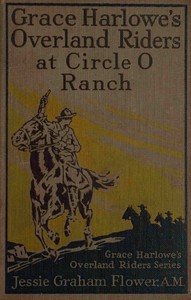
Grace Harlowe's Overland Riders at Circle O Ranch — A Reader’s Guide
(0 User reviews)
978
Project Gutenberg
2020
Not confirmed
Western stories; Adventure and adventurers -- Juvenile fiction; Ranch life -- Juvenile fiction; Horsemanship -- Juvenile fiction; California -- Juvenile fiction; Cattle stealing -- Juvenile fiction
Readers of public-domain and historical texts
Project Gutenberg digital edition
en
Edition facts
Words
54,100
Reading time
236 min
Text sections
27
For Grace Harlowe's Overland Riders at Circle O Ranch — A Reader’s Guide, the stored edition analysis reports 54,100 words, 3 hr 56 min estimated reading time, and 27 detected text sections.
The text analysis averages about 15.0 words per sentence, while the detected sections provide another way to judge how the source is divided.
Project Gutenberg metadata also associates the work with “Western stories,” connecting these edition facts with the source record’s subject description.
Source:
Project Gutenberg record #62743
Josephine Chase's 1923 western adventure features the Overland Riders at a California ranch, with clipped dialogue, dialect, and precise descriptions of wounds, weapons, and tracking that reveal authorial choices in diction and pacing.
Read the complete public-domain text at its original source.
Read on Project GutenbergJosephine Chase, writing as Jessie Graham Flower, opens Grace Harlowe's Overland Riders at Circle O Ranch with a chapter titled “Peace in the Coso Valley” that is immediately disrupted by a dream interpreted as a warning. The narrative voice shifts between the Overlanders’ colloquial banter and the guide Sam Conifer’s deliberate drawl, as in “Mules, like some fellers, is contrary critters.” Chase uses physical details—whiskers, tent stakes, bullet holes in corral posts—to ground the action in a tangible, dusty California setting. The excerpts show a preference for short, imperative sentences during crises (“Shoot, Sam! Shoot, I tell you!”) and a careful attention to the mechanics of weapons: cylinders are checked for being fully loaded, barrels are smelled for burnt powder. These choices reflect an authorial interest in verisimilitude over melodrama, even as the plot leans on rustlers, missing ponies, and a wounded lieutenant.
Dialect and Diction as Characterization
Chase distinguishes her large cast through speech patterns rather than extended description. Sam Conifer’s lines are peppered with “ye,” “whar,” and “heah,” as in “I reckon I’d kill ye whar ye stand!” The cowpunchers speak in a clipped, laconic register (“Ain’t no use fer to ask questions ’cause you ain’t goin’ to git no answers”), while the Overland girls use a more standard, educated English. This contrast is not merely decorative; it signals social roles and tensions. The rancher Joe Bindloss shifts between a “cool tone” and a “blaze” of anger, his diction tightening under stress. Even the captives’ evasions are marked by grammatical consistency: “We was ridin’ by, an knowin’ thet you-all was down the range.” Chase rarely uses dialect for comic effect; instead, it serves as a shorthand for background, loyalty, and threat level.
The Weight of Physical Evidence
Chase builds suspense through meticulous, almost forensic observation. When the captives are examined, the narrative notes that their revolvers “were fully loaded, that the barrels were cold, and that there was no odor of burnt powder.” This level of detail recurs in Jim’s later investigation: he counts seven men in the party, finds bullet holes in corral posts, and notes blood where two rustlers lay. The prose lingers on the material traces of violence—a reopened wound, a lacerated scalp, a rifle with an empty magazine. These passages slow the pacing, forcing the reader to piece together events alongside the characters. Chase trusts that the accumulation of such evidence will create tension more effectively than direct exposition. The result is a narrative that feels procedural, even as the stakes remain personal.
Voice and the Management of Threat
Threat in this novel is often announced through voice before action. The stranger who orders the Overlanders out of camp does so with a flat ultimatum: “I reckon I’d kill ye whar ye stand!” Bindloss’s menace is conveyed through understatement—“I’ll do the pulling”—while his men respond to his tone as a known signal. Chase uses reported speech to create a layered sense of danger: the reader hears the threat, sees the characters’ reactions, and then observes the aftermath. The guide’s “whiskers are expressive” is a rare moment of humor, but even that detail underscores how much information is carried by physical cues. In the bunk-house dance scene, a bullet parts Sam’s whiskers, turning a social gathering into a scene of potential violence. Chase’s dialogue rarely explains motives; instead, it presents threats as facts, leaving the reader to gauge their weight.
Pacing Through Alternating Action and Observation
The excerpts reveal a rhythm of rapid action followed by deliberate observation. A chapter may open with a yell (“It’s Pap!”) and a flurry of movement, then settle into a scene where characters examine wounds or track footprints. This alternation is most evident in the sequence where the wounded lieutenant is carried to bed, the captives are gagged, and Jim methodically searches the ranch. Chase does not linger on emotion; instead, she moves from the physical fact (a reopened wound) to the procedural response (Elfreda re-sewing the wound before the patient recovers consciousness). The cowpunchers drag prisoners by the feet to the stable—a detail that is brutal but reported without commentary. This restraint gives the violence a matter-of-fact quality, while the investigative passages provide the reader with the clues needed to follow the plot. The pacing reflects an authorial choice to prioritize clarity over sentiment.
Readers approaching Grace Harlowe's Overland Riders at Circle O Ranch will find a western adventure that rewards attention to dialogue and descriptive detail. Chase’s use of dialect, her focus on physical evidence, and her alternation between action and observation create a narrative that feels grounded in the specifics of ranch life and frontier justice. The excerpts suggest a book that moves quickly but never carelessly, with each line of dialogue and each bullet hole serving a purpose in the larger story.
That rain fell hard against the window while Grace’s riders tracked through dry California dust, every clipped word and careful wound description pulling me deeper into their crisp, purposeful world. When the last page closed, I sat quiet, and my hand wandered to The Haven Children; or, Frolics at the Funny Old House on Funny Street — Inside the Classic, its warmer, sillier rhythms a gentle counterweight to all that tough precision.
There are no reviews for this eBook.
There are no comments for this eBook.
Reader reflection
Your personal reading reflection
Build a private reading journal entry for this title.
Your progress
0
/
10
2
How did the book work for you overall?
3
Would you recommend this book to another reader?
4
What was the reading difficulty like?
5
Did any part of the book feel personally relevant?
6
Did the book deliver what you hoped for?
7
Did this book create an emotional response?
8
How would you describe its reading pace?
9
What is the main idea you are taking away?
10