1

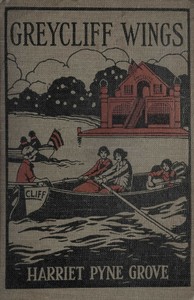
Greycliff Wings — Reading Notes
(0 User reviews)
45
Project Gutenberg
2020
Not confirmed
Boarding schools -- Juvenile fiction; College students -- Juvenile fiction; Weddings -- Juvenile fiction; Girls -- Societies and clubs -- Juvenile fiction; Athletics -- Juvenile fiction
Readers of public-domain and historical texts
Project Gutenberg digital edition
en
Edition facts
Words
57,672
Reading time
251 min
Text sections
20
Before opening Greycliff Wings — Reading Notes, the edition data offers a quick orientation: 57,672 words, 4 hr 11 min estimated reading time, and 20 detected text sections.
The text analysis averages about 15.2 words per sentence, while the detected sections provide another way to judge how the source is divided.
Project Gutenberg metadata also associates the work with “Boarding schools -- Juvenile fiction,” connecting these edition facts with the source record’s subject description.
Source:
Project Gutenberg record #62442
This editorial note examines Harriet Pyne Grove's diction, dialogue, and descriptive choices in Greycliff Wings, focusing on how character voice, aviation imagery, and setting details shape the narrative without relying on plot summary.
Read the complete public-domain text at its original source.
Read on Project GutenbergHarriet Pyne Grove's Greycliff Wings opens with a description that layers sensory details: "Deepest of sapphire skies, freshest of air, most sparkling of lake waters." The prose immediately establishes a heightened, almost lyrical tone, characteristic of the series' style. The dialogue that follows—"Listen, girls," said Pauline, "there's the plane right over us"—introduces a key motif: aviation. The plane is named "the Nighthawk," a choice that blends menace with mystery. Grove's diction often pairs concrete nouns with active verbs, as in "the dancing Greycliff" (the launch), creating a sense of motion even in static scenes.
Character Voice and Dialogue Patterns
Grove differentiates characters through their speech patterns. Eloise Winthrop is given exclamatory lines like "This way, girls!" and "Here's Betty,—and Hilary and Pauline!"—the dashes mimicking breathless enthusiasm. Pauline, in contrast, uses more analytical phrasing: "It is more their manner," she says of Cathalina and Lilian. The dialogue often carries exposition, as when Hilary reports on the boys' military assignments: "They are lieutenants or something." This naturalistic exchange avoids lengthy narration, letting character interactions advance the story. Betty's later dialogue, such as "I surrender, Captain Stone," shows a shift to playful formality under stress.
Aviation and Mechanical Imagery
The recurring aviation terms—"Nighthawk," "hydroplane," "White Wings motor boat"—serve as both plot devices and atmospheric elements. Grove uses them to create tension: "Why, there's something the matter; it's coming down!" The naming of vehicles ("White Wings," "Nighthawk") personifies them, aligning with the book's title. Descriptions of sound are precise: "It was not the 'night hawk.' The sound was different. It was a boat." This auditory detail grounds the reader in Betty's perspective, emphasizing her reliance on hearing when sight is limited. The mechanical imagery contrasts with the natural setting, highlighting a collision between domestic school life and external threats.
Setting and Sensory Detail
Grove's settings are rendered through specific sensory cues. The picnic scene includes "freshly painted" launch letters "showing clearly against a pearl-grey side." Later, Betty's isolation is conveyed via sounds: "She had heard the cows lowing." The house becomes a fortress of locked doors and cautious movements: "Slowly she walked again to the front door and looked out." Nature is both refuge and obstacle—Betty considers hiding "in the little vineyard on the hillside" or slipping "like a little Indian maid from covert to covert." These details build atmosphere without relying on abstract description, grounding the reader in tangible, immediate experience.
Narrative Structure and Pacing
The excerpts reveal a pattern of alternating dialogue and action. Grove often uses short paragraphs for moments of tension, as when Betty reads the note: "Betty dropped the note into her lap in perfect surprise." The narrative then shifts to her internal reasoning: "These things flashed through her mind." This technique maintains momentum while revealing character. The author also employs cliffhanger-like chapter endings, such as the plane's descent, to propel the story forward. The pacing is brisk, with minimal exposition; information about characters' relationships and backstory emerges through conversation rather than authorial summary.
Readers attentive to Grove's craft will notice how she balances multiple character perspectives through dialogue tags and action beats. The aviation motif is not merely decorative but integral to the plot's tension. The author's preference for concrete nouns and active verbs gives the prose a brisk, visual quality. This edition invites scrutiny of how early twentieth-century girls' series fiction used genre conventions—mystery, adventure, school life—while maintaining distinct authorial voice.
Years at this desk have taught me how certain books lean on one another. Miss Grove's careful attention to the cadence of speech in Greycliff Wings always reminds me of the gentle, unhurried rhythm found in Uncle Wiggily's fishing trip — Text and Context. Both listen closely to their words, letting character whisper through tone rather than shout through plot.
There are no reviews for this eBook.
There are no comments for this eBook.
Reader reflection
What did you think of this book?
Answer a few questions and save a private reflection on this device.
Your progress
0
/
10
2
Did this book hold your interest?
3
Is this a title you would suggest to others?
4
What was the reading difficulty like?
5
How clear did the writing feel?
6
Did the book give you something worth debating?
7
Was the book moving at the right speed?
8
What was its emotional impact?
9
What did this book teach you most?
10