1

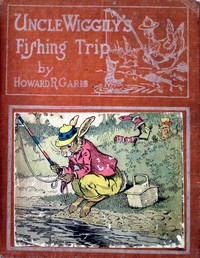
Uncle Wiggily's fishing trip — Text and Context
(0 User reviews)
2578
Project Gutenberg
2024
Not confirmed
Humorous stories; Animals -- Juvenile fiction; Fishing -- Juvenile fiction; Rabbits -- Juvenile fiction; Uncle Wiggily (Fictitious character) -- Juvenile fiction
Readers of public-domain and historical texts
Project Gutenberg digital edition
en
Edition facts
Words
6,319
Reading time
28 min
Text sections
5
The source record for Uncle Wiggily's fishing trip — Text and Context measures this digital text at 6,319 words, 28 min estimated reading time, and 5 detected text sections.
The text analysis averages about 15.8 words per sentence, while the detected sections provide another way to judge how the source is divided.
Project Gutenberg metadata also associates the work with “Humorous stories,” connecting these edition facts with the source record’s subject description.
Source:
Project Gutenberg record #72612
This editorial note examines the structure, recurring images, and movement between scenes in Howard R. Garis's 'Uncle Wiggily's fishing trip,' focusing on how the bunny rabbit gentleman's fishing expedition becomes a series of episodic encounters with animal friends and a fox antagonist.
Read the complete public-domain text at its original source.
Read on Project GutenbergUncle Wiggily's fishing trip opens with the bunny rabbit gentleman standing outside his hollow stump bungalow, watching Jackie Bow Wow and Charlie Chick head off with poles. The story quickly establishes a pattern: each scene begins with a question or a call to action, then shifts to a new location or predicament. The narrative moves from the clothesline to the woods, then to a marshmallow roast, with each setting introducing fresh obstacles. This structure, combined with recurring images of hooks, sticky substances, and polite requests, gives the book a rhythmic, almost ritualistic quality.
Episodic Structure and Scene Transitions
The book is divided into three distinct stories, each announced in the subtitle. The first story, 'The Good Luck He Had With the Clothes Hook,' begins with Uncle Wiggily asking for fishing line. The transition from domestic setting to adventure is abrupt: Nurse Jane appears, then the animal children arrive. Scenes shift without warning—from the bungalow to the woods, then to the fox's territory. Each episode ends with a resolution that allows the next to begin, such as the fox being stuck to marshmallows. This episodic structure makes the book suitable for short reading sessions, as each segment is self-contained.
Recurring Images: Hooks, Sticky Substances, and Polite Deception
Hooks appear in multiple forms: a clothes hook, a fishhook, and later, sticky marshmallows that trap the fox. Uncle Wiggily's use of a 'smooth hammock hook' instead of a sharp one reflects a gentle approach, but the same principle of entrapment recurs. The marshmallows become a sticky trap, echoing the clothesline hook. Uncle Wiggily's polite language—'Won't you please be seated, Mr. Fox?'—contrasts with the fox's threats, creating a pattern of verbal cunning. These repeated motifs tie the stories together, even when the settings change.
Movement Between Domestic and Wild Spaces
The narrative moves fluidly between the safe, domestic space of the hollow stump bungalow and the unpredictable woods. Nurse Jane's presence anchors the domestic sphere, while the fox represents the wild. Uncle Wiggily's journey is a series of crossings: from the clothesline to the fishing spot, then deeper into the woods. The fox's claim that 'these were my woods' introduces territorial conflict. The final scene, with the fox stuck and the children sent home, restores order. This back-and-forth movement reinforces the tension between safety and danger.
Voice and Dialogue Patterns
The dialogue is characterized by repeated phrases and polite interjections. Uncle Wiggily frequently says 'I pray you' and 'Wouldn't you like to...?' The fox uses growls and threats, but also agrees to suggestions. The animal children speak in exclamations and laughter. This patterned speech gives the book a theatrical quality, as if each character has a set of lines. The narrator's voice is direct, often addressing the reader with 'you may read' or 'if you like.' This consistent voice helps unify the episodic structure.
Readers may find it useful to note how each story in this collection follows a similar arc: a request, a journey, a confrontation, and a clever resolution. The recurring images of hooks and sticky substances reward attention, as they link the separate tales. The book's brevity and rhythmic dialogue make it ideal for reading aloud, with opportunities for different voices. Pay attention to how Uncle Wiggily's politeness functions as a tool for survival.
That rainy afternoon, I kept returning to how Uncle Wiggily’s detours always circled back to the same pond. Each interruption felt random until I noticed the fox waiting at the edges. The rhythm reminded me of another book I’d once set aside, where a girl’s quiet, wandering days hid a similar shape. I found Young Peggy McQueen — A Reader’s Guide that evening, and it felt like finding a familiar footprint on a muddied path.
There are no reviews for this eBook.
There are no comments for this eBook.
Reader reflection
Take a moment to reflect on this book
Create a short personal record of your experience with this book.
Your progress
0
/
10
2
How much did you enjoy the reading experience?
3
Would you recommend this book to another reader?
4
What was the reading difficulty like?
5
Did the book deliver what you hoped for?
6
How clearly were the main ideas presented?
7
Did any part of the book stay with you emotionally?
8
Was the book moving at the right speed?
9
Which lesson or insight stayed with you?
10