1

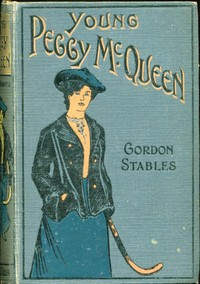
Young Peggy McQueen — A Reader’s Guide
(0 User reviews)
2213
Project Gutenberg
2023
Not confirmed
Shipwreck survival -- Juvenile fiction; Adventure stories; Girls -- Juvenile fiction; Islands of the Pacific -- Juvenile fiction; Traveling theater -- Juvenile fiction
Readers of public-domain and historical texts
Project Gutenberg digital edition
en
Edition facts
Words
38,433
Reading time
168 min
Text sections
5
Young Peggy McQueen — A Reader’s Guide can be approached with a clearer sense of reading commitment from its source measurements: 38,433 words, 2 hr 48 min estimated reading time, and 5 detected text sections.
The text analysis averages about 17.8 words per sentence, while the detected sections provide another way to judge how the source is divided.
Project Gutenberg metadata also associates the work with “Shipwreck survival -- Juvenile fiction,” connecting these edition facts with the source record’s subject description.
Source:
Project Gutenberg record #70826
Gordon Stables's 1900 adventure follows twelve-year-old Peggy McQueen, a performer in a traveling minstrel troupe, from a Scottish caravan to a Pacific cannibal isle. The narrative shifts between pastoral domesticity and shipwreck survival, with a direct, confiding voice that addresses readers as 'my dear girl and boy readers.'
Read the complete public-domain text at its original source.
Read on Project GutenbergThe first chapter of Young Peggy McQueen opens with the heroine alone at half-past four on a May morning, leaning on the half-door of her caravan. The prose lingers on sensory detail—sunshine on her bare arms, the bloodhound Ralph's trailing ears—before revealing her purpose: to bathe in the dew for beauty. This unhurried, domestic scene establishes a voice that is both descriptive and confiding, as the narrator directly addresses readers with a rhetorical question about dew's powers.
Yet the book's structure soon fractures this calm. The table of contents promises a second book titled 'Storm and Wreck' and 'On the Cannibal Isle,' signaling a sharp pivot from pastoral wandering to survival. The narrator's tone remains steady through both registers, treating the shift as a natural progression rather than a rupture.
The Narrator's Intimate Address
The most distinctive feature of Stables's voice is its direct engagement with the reader. In the opening chapter, after describing Peggy's dew-seeking, the narrator inserts: 'Is it not a fact, that if a young girl dips her face in the dews of this merry morning, she will be sweet and beautiful all the glad year? Nobody in his senses would think of denying this.' This rhetorical question assumes a shared folk belief and invites the reader into complicity. Later, when describing the summer's scenery, the narrator breaks off: 'Shall I describe the scenery in detail...? If I had space, nothing on earth would please me more, my dear girl and boy readers.' The aside acknowledges the constraints of the narrative while reinforcing a sense of intimacy. This technique creates a conversational rhythm that softens the didacticism of the adventure plot.
Pace and the Pivot from Pastoral to Peril
The book's pace is governed by a deliberate alternation between leisurely description and abrupt plot advancement. Early chapters dwell on the minutiae of caravan life: the clock ticking on the dressing-table, the parrot's feather in Peggy's Tam o' Shanter, the bloodhound's 'almost imperceptible waggle.' Time slows to accommodate these details. But the transition to Book II is signaled by a chapter title—'Storm and Wreck'—that compresses disaster into a single phrase. The narrator does not linger on the wreck itself; instead, the survival section begins with a pragmatic heading: 'When the Worst Comes to the Worst.' This compression creates a jolt, as if the narrative itself is impatient to reach the island. The effect is a story that moves in fits and starts, mirroring the unpredictability of the wandering life it describes.
Recurring Motifs: Caravan, Bloodhound, and Performance
Three elements recur with enough frequency to act as structural anchors. First, the caravan—called the 'Little Rover'—is both home and stage. Peggy's morning routine is framed by its interior: the dimity-bedecked looking-glass, the goat-skin on the floor. Second, the bloodhound Ralph appears as a silent companion whose tail wags convey judgment. The narrator reads his expression: 'I think,' he seemed to say, 'it is folly to be out of bed for three hours yet.' This anthropomorphism is consistent and understated. Third, performance is never far away. Even before the shipwreck, Peggy adopts the stage name 'Thalassaine' and gives palmistry lectures. The bills for these performances are quoted verbatim, grounding the fantasy in the mechanics of Victorian traveling theater. These motifs—home, animal, show—tie the two halves of the book together.
Readers should attend to the way Stables uses the narrator's asides to control emotional distance. When the voice grows expansive—apostrophizing the summer or the scenery—it signals a moment of reflection before action resumes. The bloodhound Ralph, though silent, often functions as a barometer of tension. And the caravan, with its precise inventory of domestic objects, becomes a portable stage that persists even after the setting shifts to a cannibal isle. These patterns reward a second reading.
Some evenings, thinking of Peggy McQueen’s steadfastness amid shipwreck and strange shores, I find myself beside The Mislaid Uncle, whose quieter confusions ask the same gentle question—how we keep our bearings when home shifts. They sit apart on my shelf, yet share a certain warmth, like old friends who never met but understand each other perfectly. The Mislaid Uncle — Edition Insights holds that same tender, unhurried spirit, and I am glad for their company.
There are no reviews for this eBook.
There are no comments for this eBook.
Reader reflection
Take a moment to reflect on this book
Create a short personal record of your experience with this book.
Your progress
0
/
10
2
What was your overall reaction to the book?
3
How likely are you to recommend this book?
4
How much effort did this book require?
5
Which part made the strongest impression?
6
Would you read this book again?
7
Did any part of the book stay with you emotionally?
8
Did you gain anything practical from the text?
9
In one sentence, what did you learn?
10