1

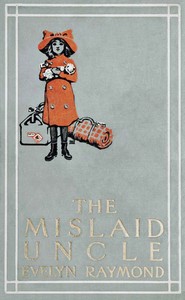
The Mislaid Uncle — Edition Insights
(0 User reviews)
307
Project Gutenberg
2021
Not confirmed
Twins -- Juvenile fiction; Friendship -- Juvenile fiction; Uncles -- Juvenile fiction; Cousins -- Juvenile fiction; Household employees -- Juvenile fiction; Amusements -- Juvenile fiction; Sick -- Juvenile fiction; Mothers and daughters -- Juvenile fiction
Readers of public-domain and historical texts
Project Gutenberg digital edition
en
Edition facts
Words
32,308
Reading time
141 min
Text sections
13
The Mislaid Uncle — Edition Insights can be approached with a clearer sense of reading commitment from its source measurements: 32,308 words, 2 hr 21 min estimated reading time, and 13 detected text sections.
The text analysis averages about 14.2 words per sentence, while the detected sections provide another way to judge how the source is divided.
Project Gutenberg metadata also associates the work with “Twins -- Juvenile fiction,” connecting these edition facts with the source record’s subject description.
Source:
Project Gutenberg record #64911
Evelyn Raymond's 1903 children's novel uses precise diction and dialogue to contrast a self-reliant girl, a gouty uncle, and a household of servants, with the 'mislaid uncle' plot unfolding through misunderstandings and domestic comedy.
Read the complete public-domain text at its original source.
Read on Project GutenbergFrom its first chapter, The Mislaid Uncle establishes character through voice and gesture rather than exposition. When Josephine, puzzled by her mother's tears, asks 'Am I “poor,” mamma?' and then 'Where are my rags?', Raymond reveals the child's literal-mindedness and her mother's emotional strain in a single exchange. The opening scene—Doctor Mack's 'take-your-medicine-right-away kind of a voice' and Josephine's resentment of a vaccination that 'had made her miserable for the present'—grounds the story in concrete, sensory detail. The setting, 'a land where the sun shines nearly all the time,' is named only as San Diego, but the narrative quickly moves indoors, where domestic tensions and the 'mislaid' uncle plot begin to take shape.
Diction and the Child's Perspective
Raymond renders Josephine's viewpoint through vocabulary that is childlike but never condescending. When the girl 'glanced about the familiar room' and sees 'a deep, deep crease between its brows' on her mother's face, the phrasing blends observation with a child's limited understanding of adult worry. The narrator reports that Josephine 'realized that they were talking about her, but didn’t see why that should make her mother sad'—a sentence that preserves the character's confusion without explaining it away. This restraint extends to dialogue: Josephine's question 'Am I “poor,” mamma?' is answered with 'At this moment I feel that you are very poor indeed,' a reply that shifts the emotional weight onto the mother without breaking the child's perspective. The text consistently avoids telling readers what to feel, instead letting the gap between what Josephine perceives and what adults intend create its own tension.
Voice and Social Hierarchy in Dialogue
The speech patterns of servants and employers are sharply differentiated. Peter, the butler, addresses his master as 'Massa Joe' and uses the courtly 'suh,' while Mr. Smith speaks in clipped commands: 'Explanations are rarely useful. Implicit obedience is what I require.' The clerk Wakeman's ingratiating tone—'Good morning, sissy. Didn’t know you had any grandchildren, Mr. Smith'—is met with the blunt retort 'Haven't. Of course.' Raymond uses these exchanges to map social positions without authorial commentary. Even minor characters like Lafayette and Apollo, the servants drawn by music from their duties, are given distinct roles through the narrator's dry observation that they 'wasted their time, with none to reprove; because, for once, the sharp eyes of the major-domo, Peter, were bent upon a more delectable sight.' The dialogue carries the plot forward while revealing character through rhythm and word choice.
Recurring Motifs: Music, Gout, and Misunderstanding
Several details recur with thematic weight. The flute that 'uttered but the ghosts of former melodies' appears when Mr. Smith is momentarily softened by Josephine's singing, only to be interrupted by the 'discordant ring of the electric bell'—a sound that signals the return of business and conflict. Gout is another repeated element: Mr. Smith's 'foot began to ache afresh' when Wakeman arrives, linking physical discomfort to emotional irritation. The motif of mislaid identity—the 'mislaid uncle' of the title—is foreshadowed by the telephone message about 'another Joseph Smith in town,' a confusion of names that drives the plot. Raymond weaves these elements into the texture of everyday life: the flute is 'wrapped in its swaddling clothes,' a homely detail that makes the instrument feel like a character itself. The cumulative effect is a world where objects and ailments carry as much meaning as dialogue.
Structure and the Unfolding of the 'Mislaid' Plot
The novel's structure relies on delayed revelation and mistaken identity, but the excerpts show Raymond building this through small, concrete scenes rather than large twists. Chapter titles like 'A Human Express Parcel' and 'The Disposal of the Parcel' hint at a comic treatment of the uncle as a delivered object. The opening chapter ends with Josephine's mother wailing 'I cannot, I cannot!' and the doctor insisting there is 'nothing else to do'—a setup that leaves the reader uncertain of the plan. Later, the arrival of 'the boy from next door' introduces a new character without explanation, and the scene cuts away before his purpose is clear. Raymond trusts readers to piece together connections: the 'multitude of Josephs' chapter title suggests a running joke about names, while the business manager's over-zealousness creates complications. The narrative proceeds by accumulation of such moments, each adding a layer to the central puzzle of the uncle's whereabouts.
Readers attentive to Raymond's craft will notice how she uses small physical details—a creased brow, a wrapped flute, a ringing bell—to carry emotional weight. The story rewards close attention to who speaks when and how, as social rank and personal history are encoded in every exchange. The 'mislaid uncle' plot is less a mystery than a mechanism for bringing characters into collision, and the pleasure lies in watching Raymond orchestrate those collisions with economy and wit.
The rain kept time with the gouty uncle’s grumbles that afternoon, and I lingered over how neatly Evelyn Raymond’s girl untangled every misunderstanding. Yet the servants’ sideways glances left me wondering about locked rooms and quiet mischief. Before closing the book, I found myself reaching for The wizard's cave — Edition Insights, which sat unread on the shelf, and the afternoon stretched into evening.
There are no reviews for this eBook.
There are no comments for this eBook.
Reader reflection
Record your reading impressions
A brief reflection can help important ideas stay with you longer.
Your progress
0
/
10
2
How much did you enjoy the reading experience?
3
Would you recommend this book to another reader?
4
What was the reading difficulty like?
5
Is this a title worth rereading?
6
Did any part of the book feel personally relevant?
7
How valuable was this book for your own interests?
8
How did the pace of the book feel?
9
What is the main idea you are taking away?
10