1

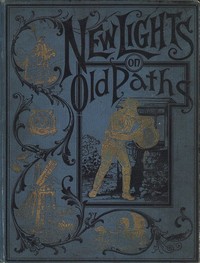
New Lights on Old Paths — A Closer Reading
(0 User reviews)
369
Project Gutenberg
2016
Not confirmed
Conduct of life -- Juvenile fiction; Children's stories
Readers of public-domain and historical texts
Project Gutenberg digital edition
en
Edition facts
Words
53,261
Reading time
232 min
Text sections
91
The source record for New Lights on Old Paths — A Closer Reading measures this digital text at 53,261 words, 3 hr 52 min estimated reading time, and 91 detected text sections.
The text analysis averages about 20.2 words per sentence, while the detected sections provide another way to judge how the source is divided.
Project Gutenberg metadata also associates the work with “Conduct of life -- Juvenile fiction,” connecting these edition facts with the source record’s subject description.
Source:
Project Gutenberg record #51062
Charles Foster's 1887 collection of fables uses animal characters and natural settings to illustrate moral lessons. The preface frames the book as applying old truths to daily life, not presenting new ones. Excerpts show varied narrative voices, from the pragmatic cock in 'The Brook and the Waterwheel' to the reflective dialogue in 'Wreckage.'
Read the complete public-domain text at its original source.
Read on Project GutenbergCharles Foster's New Lights on Old Paths (1887) is a collection of fables that, as the preface states, aims not to present new truths but to apply old ones to daily life. The book's 91 sections vary widely in subject and treatment, from animal tales to dialogues between objects like a gate and gate post. The excerpts reveal a consistent pattern: a brief narrative leads to a moral maxim, often delivered by a character or narrator. Foster's voice shifts between the pragmatic, as when a cock declares 'I'm going out to hunt for my dinner' despite rain, and the reflective, as in 'Wreckage,' where two men discuss the ships that have come to grief. The illustrations, all original to the book, are compared to the music of a song, meant to compensate for any textual deficiencies.
Narrative Voice and Moral Framing
The fables employ a consistent structure: a short story followed by a moral lesson, often introduced by phrases like 'He will gather most in the end who does not easily give way to discouragement.' The narrator's voice is didactic but not heavy-handed; in 'The Robin,' the observation that 'those who are surrounded with objects on which to bestow their affections, know not what a loss such an insignificant creature may be' is presented as general truth rather than direct command. The preface itself sets the tone, acknowledging that 'nobody adds another to the long list who does not believe that—on his subject, at least—there is room for one book more.' This self-awareness suggests a writer conscious of his place in a crowded moral tradition.
Pace and Variation Across Fables
The pace of the fables shifts markedly. Some, like 'The Brook and the Waterwheel,' move briskly through dialogue and action: the cock's decision to hunt in the rain leads quickly to the flock following, then to the moral. Others, like 'Wreckage,' slow to a contemplative walk along a beach, with extended reflection on 'the evil that sometimes darkens the path before us.' The table of contents lists 91 titles, from 'The Innkeeper' to 'The Cat and the...' (cut off), indicating a rhythm of short, self-contained pieces. This variety prevents monotony, though the moral conclusions can feel predictable. Foster seems to trust that the illustrations—350 of them—will carry some of the narrative weight, as he notes in the preface.
Recurring Details and Setting
Several fables share a rural or coastal setting. 'The Robin' takes place in a 'narrow alley' where a poor widow hangs her bird outside to 'catch a glimpse of the blue sky.' 'Wreckage' unfolds on a sea-beach 'swept clean and smooth by the falling tide,' with men recognizing fragments of wrecked vessels. Animals appear frequently: chickens, ducks, guinea-fowls, a robin, a cock. These details ground the moral lessons in tangible, everyday scenes. The preface's claim that 'the illustrations of a story may be compared to the music of a song' hints at a deliberate pairing of text and image, though the excerpts alone cannot confirm how this works in practice. The setting choices—barnyards, beaches, alleys—create a world where moral truths emerge from ordinary observation.
Language and Didactic Tone
Foster's language is plain but not artless. In 'Wreckage,' the dialogue carries emotional weight: 'a gloom settles over me that makes life seem, as I look back on it, more like a time of clouds and storms.' The moral that follows—'The evil that sometimes darkens the path before us should not prevent our seeing the good'—is balanced by the earlier speaker's melancholy. The fables avoid complex syntax, favoring direct statements. The preface's admission that 'it is not new truths that we need, but the application of old ones' signals a conservative approach to morality. This consistency in language and purpose gives the collection a unified voice, even as the subjects range from a learned owl to a weedy farm.
Readers approaching New Lights on Old Paths should expect a series of discrete moral lessons rather than a continuous narrative. The fables reward attention to their varied pacing and the way Foster uses dialogue to dramatize ethical choices. The original illustrations, though not reproduced here, were integral to the book's design; imagining them may enrich the reading. The preface's modest claim—that the book offers no new truths—invites readers to consider how old moral frameworks can be freshly applied through simple, concrete stories.
Reading Foster’s fables, I remembered my grandfather’s worn copy of The Pearl Box Containing One Hundred Beautiful Stories for Young People — A Closer Reading, its pages thick with his pencil marks. Both books feel like old paths walked slowly, where a fox’s quiet cunning or a broken wheel’s patience teaches without preaching. That tender, unhurried weight—truth carried gently—settles the same way each time.
There are no reviews for this eBook.
There are no comments for this eBook.
Reader reflection
Your personal reading reflection
Build a private reading journal entry for this title.
Your progress
0
/
10
2
How much did you enjoy the reading experience?
3
Would you pass this book on to a friend?
4
How much effort did this book require?
5
Did you gain anything practical from the text?
6
Could you follow the author’s main argument?
7
How did the reading compare with what you expected?
8
Did you relate to its people, ideas, or situations?
9
What did this book teach you most?
10