1

The Talkative Wig — Story, Setting & Ideas
(0 User reviews)
3530
Project Gutenberg
2003
Not confirmed
Conduct of life -- Juvenile fiction; Children -- Conduct of life -- Juvenile fiction; Friendship -- Juvenile fiction; Slavery -- Juvenile fiction; Storytelling -- Juvenile fiction; Snow -- Juvenile fiction; Wigs -- Juvenile fiction
Readers of public-domain and historical texts
Project Gutenberg digital edition
en
Edition facts
Words
15,324
Reading time
67 min
Text sections
2
The Talkative Wig — Story, Setting & Ideas can be approached with a clearer sense of reading commitment from its source measurements: 15,324 words, 1 hr 7 min estimated reading time, and 2 detected text sections.
The text analysis averages about 22.4 words per sentence, while the detected sections provide another way to judge how the source is divided.
Project Gutenberg metadata also associates the work with “Conduct of life -- Juvenile fiction,” connecting these edition facts with the source record’s subject description.
Source:
Project Gutenberg record #4048
In this frame-tale, household objects in a garret tell their life stories, revealing 19th-century attitudes toward slavery, sacrifice, and social class through the wig's own history and the poignant tale of Alice's hair.
Read the complete public-domain text at its original source.
Read on Project GutenbergEliza Lee Follen's The Talkative Wig (1840) opens not with the wig but with a rainy Sunday and a girl reading Pilgrim's Progress in an old garret. The frame narrative quickly gives way to a chorus of animated objects—curling tongs, a coat, a spinning wheel—each demanding the wig fulfill its promise to relate its own history. The wig stalls, insisting two other objects speak first, a deferral that establishes the story's central tension: the wig is both a reluctant narrator and a commodity whose value depends on whose head it adorns.
The Wig's Reluctant Voice
The wig speaks only after being pressed by the curling tongs, called “Friend Frizzle,” who reminds the assembly of the wig's broken promise. The wig's reply—“I did agree to relate my adventures, but I said I would wait till all had told their stories”—reveals a character who uses procedural delay to avoid exposure. This verbal evasion mirrors the wig's physical nature: a constructed object that can be reshaped, boiled, or sold. Follen gives the wig a voice that is both petulant and strategic, hinting at a history it would rather not recount.
The Coat's Class Anxieties
The coat, by contrast, speaks with pride and class consciousness. It boasts of its “delicate white” fabric and its role in making a major of cadets, claiming “I think I did more to make the major than my Lord Sword did.” The coat's monologue reveals a hierarchy among objects: it looks down on the baize gown and insists on its own refinement. Follen uses the coat's voice to satirize social pretension, as the coat measures worth by its former human wearer's rank. The coat's self-importance is undercut by its current dusty state in the garret, a detail that quietly mocks its claims.
Alice's Hair and Maternal Sacrifice
The most affecting passage belongs to the wig's origin: the hair of Alice, a poor widow who cuts off her long locks to buy school supplies for her son William. The narrative lingers on the act: “Alice took her scissors, and cut off lock after lock, till all were gone, save a few which she left around her forehead.” The son weeps, valuing the hair “more than all learning.” Follen renders the sacrifice through sensory details—the blue ribbon, the muslin cap, the child's tears—without moralizing. The hair, once alive with the beatings of Alice's “gay and generous heart,” becomes a commodity, boiled into a wig.
The Hair Dealer's Pragmatism
When the vicar brings Alice's hair to a London dealer, the transaction is stark. The dealer handles the hair “as fondly as if I had been a baby,” but immediately declares, “I shall have to make a man's wig of it. The curls will all boil out.” The vicar's horror—he wanted to frame the hair “with a glass over it”—contrasts with the dealer's blunt trade. Follen uses this scene to expose the gap between sentimental value and market price. The wig's own voice, which narrates its journey from Alice's head to the garret, is haunted by this moment of commodification.
Readers should attend to how Follen distributes sympathy across objects and humans alike. The wig is not merely a gimmick; its reluctance to speak, its origin in a mother's sacrifice, and its eventual silence in the garret all comment on the stories we choose to tell—and those we suppress. The frame narrative, with its sleepy girl and purring cat, invites a dreamy suspension of disbelief, but the details of hair selling and class distinction anchor the fantasy in hard social realities.
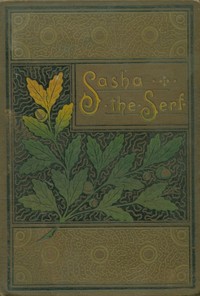
That rainy afternoon, the wig’s story of Alice’s severed hair lingered with me—how sacrifice wears a pretty mask. Later, browsing shelves, my hand stopped on a worn volume. I remembered that same quiet ache, the weight of lives bound to circumstance. Sasha the serf, and other stories of Russian life — Background and Themes felt like stepping from one garret into another, hearing different voices speak the same language of unfreedom.
There are no reviews for this eBook.
There are no comments for this eBook.
Reader reflection
What did you think of this book?
Answer a few questions and save a private reflection on this device.
Your progress
0
/
10
2
Was reading this book enjoyable?
3
How likely are you to recommend this book?
4
Did the language feel accessible?
5
How well did it match your expectations?
6
How closely did the book connect with your experience?
7
How strongly did the book affect you emotionally?
8
Which element worked best for you?
9
What did this book teach you most?
10