1

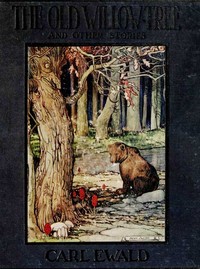
The Old Willow Tree, and Other Stories — A Reader’s Guide
(0 User reviews)
1043
Project Gutenberg
2010
Not confirmed
Children's stories; Nature -- Juvenile fiction
Readers of public-domain and historical texts
Project Gutenberg digital edition
en
Edition facts
Words
38,122
Reading time
166 min
Text sections
6
The catalog record for The Old Willow Tree, and Other Stories — A Reader’s Guide provides practical reading context through 38,122 words, 2 hr 46 min estimated reading time, and 6 detected text sections.
The text analysis averages about 13.5 words per sentence, while the detected sections provide another way to judge how the source is divided.
Project Gutenberg metadata also associates the work with “Children's stories,” connecting these edition facts with the source record’s subject description.
Source:
Project Gutenberg record #31167
Carl Ewald's collection uses talking trees, flowers, and animals to explore natural cycles and social hierarchies. The stories move between species' perspectives, with recurring motifs of seasonal change, competition for light and space, and the tension between individual will and ecological order.
Read the complete public-domain text at its original source.
Read on Project GutenbergThe Old Willow-Tree, and Other Stories opens with a botanical taxonomy that doubles as a social commentary: willows range from dwarf varieties that 'creep along the ground' in arctic regions to stately poplars, their cousins. This hierarchical view of nature sets the tone for a collection where plants and animals converse, argue, and negotiate their places in a world governed by seasonal rhythms and unspoken rules. The translator, Alexander Teixeira de Mattos, preserves a conversational, sometimes ironic voice—as when starlings bicker over migration timing and anemones cautiously test the arrival of spring.
Structure as Seasonal Cycle
The book's nine chapters follow a loose seasonal progression, though the excerpts show that individual stories often pivot on a single natural event—the first spring warmth, a tree's fall, a flower's bloom. The opening chapter, 'The Old Willow-Tree,' establishes a pattern: a long-lived tree becomes a stage for smaller creatures and plants to act out their dramas. Later stories like 'The Mistletoe' and 'The Anemones' shift focus to parasitic or ephemeral species, each with its own timeline. This structure mirrors the way a walker might notice different inhabitants of a wood across the year, without imposing a rigid narrative arc. The result is a series of vignettes that accumulate into a portrait of interdependence.
Recurring Images of Exposure and Shelter
Throughout the excerpts, characters worry about being 'too early' or exposed to cold. The anemones 'carefully stuck their heads out of the ground' but remain 'tightly tucked up in their green wraps.' The starlings complain of cold and hunger, and the swallow scolds the flowers for cowardice. This motif of inadequate shelter recurs: the dwarf willows hide under snow, the old willow tree offers shade and perches, and the beech and oak compete for sunlight. The text repeatedly frames survival as a matter of timing and placement—who is sheltered, who is exposed, and when. Even the illustrations, as listed in the front matter, emphasize moments of vulnerability: a dog blinking with blind eyes, a mouse in a sugar-basin.
Movement Between Scales and Perspectives
Ewald's narration moves fluidly from the microscopic to the landscape scale. A single chapter might begin with a general observation about willow species, then zoom in on a particular tree, then follow a starling's flight or an anemone's root. This shifting perspective is reinforced by the dialogue: animals and plants speak in distinct voices—the starling's marital squabble, the anemones' cautious whispers, the swallow's imperious commands. The effect is a world where every organism has agency and opinion, yet none fully controls the larger forces of season and competition. The translator's note that 'most of the stories are new to this country' suggests that these shifts in scale were part of Ewald's original Danish appeal.
Voice and Irony in Natural Dialogue
The dialogue in these excerpts is notably sharp and often comic. Mr. Starling complains that his wife is 'always in such a terrible hurry to come out to the country,' while Mrs. Starling retorts that the eggs are 'your eggs just as much as mine.' The anemones, after hearing the swallow's call, reply with a proverb: 'One swallow does not make a summer.' This blend of folk wisdom and domestic bickering gives the natural world a human, but not sentimental, character. The narrator occasionally steps in with dry asides—'it is simply stupid to be ashamed of being poor'—that undercut any tendency toward moralizing. The tone suggests that nature is neither benevolent nor cruel, but full of creatures making do with what they have.
Readers approaching this collection will find that each story rewards attention to its specific setting and cast. The chapters can be read in any order, but the cumulative effect depends on noticing how the same themes—timing, competition, interdependence—recur across different species. Pay particular attention to the moments when a character misjudges the season or overestimates its own strength; these are where Ewald's quiet irony is most evident.
The old willow’s stories left me thinking about how everything competes for light, even quietly. It reminded me of another book, where a wig’s chatter hides a similar struggle for place and purpose. The Talkative Wig — Story, Setting & Ideas carries that same gentle ache, that sense of wanting to matter within a world that barely notices. I kept turning those pages over in my mind.
There are no reviews for this eBook.
There are no comments for this eBook.
Reader reflection
How did this book work for you?
Your answers remain private and are stored only in this browser.
Your progress
0
/
10
2
Was reading this book enjoyable?
3
Is this a title you would suggest to others?
4
What was the reading difficulty like?
5
Which part made the strongest impression?
6
Did this book create an emotional response?
7
Would you like to discuss this book with someone?
8
Did the book offer a fresh perspective?
9
What is the main idea you are taking away?
10