1

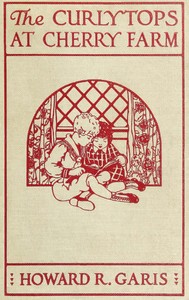
The Curlytops at Cherry Farm — Reading Notes
(0 User reviews)
1298
Project Gutenberg
2024
Not confirmed
Dogs -- Juvenile fiction; Siblings -- Juvenile fiction; Grandparents -- Juvenile fiction; Domestic animals -- Juvenile fiction; Farms -- Juvenile fiction
Readers of public-domain and historical texts
Project Gutenberg digital edition
en
Edition facts
Words
52,572
Reading time
229 min
Text sections
29
For The Curlytops at Cherry Farm — Reading Notes, the stored edition analysis reports 52,572 words, 3 hr 49 min estimated reading time, and 29 detected text sections.
The text analysis averages about 12.8 words per sentence, while the detected sections provide another way to judge how the source is divided.
Project Gutenberg metadata also associates the work with “Dogs -- Juvenile fiction,” connecting these edition facts with the source record’s subject description.
Source:
Project Gutenberg record #73008
This editorial note examines how the catalog subjects—dogs, siblings, grandparents, domestic animals, farms—align with the actual content of the excerpts, revealing a story centered on sibling banter, farm life, and mild adventures rather than deep animal or grandparent roles.
Read the complete public-domain text at its original source.
Read on Project GutenbergThe catalog subjects for The Curlytops at Cherry Farm list dogs, siblings, grandparents, domestic animals, and farms. The excerpts, however, show that the story’s engine is the verbal sparring between Ted and Janet Martin. In the opening pages, Janet corrects Ted’s dropped ‘g’ in “combin’,” and he retorts about using “switch-hazel” on his hair. This back-and-forth, not any animal or grandparent, drives the early scenes. The farm setting emerges only after the first chapter, and the goat, dog, or cow appear as props rather than central figures. The catalog’s emphasis on “dogs” and “domestic animals” suggests a pastoral focus, but the excerpts reveal a book more invested in sibling dynamics and mild mishaps than in animal characters or farm labor.
Sibling Speech as Action
The excerpts devote considerable space to how Ted and Janet talk. Their mother is trying to teach them “not to drop the ‘g’ of the words where it belonged,” and the children turn this lesson into a game. Janet announces she “hasn’t dropped any of my ‘g’s’ to-day,” while Ted admits he was “in a hurry” and lets his grammar slip. This linguistic play is not just a quirk; it structures the narrative. The dialogue carries the plot forward more than description does. When Ted nearly falls into the lake while fishing, the crisis is resolved through his father’s scolding and Ted’s promise, not through any dramatic action. The catalog subject “siblings” is accurate, but the excerpts show that the sibling relationship is defined by teasing and correction, not by shared adventures or emotional bonding.
The Farm as a Backdrop
Despite the title and the catalog subject “farms,” the excerpts do not dwell on farm work or rural detail. The fishing episode on Clover Lake, the mention of Star Island, and the picnic lunch are generic outdoor activities that could occur anywhere. The farm itself—Cherry Farm—is named but not described in the provided text. The domestic animals listed in the catalog (dogs, cows, etc.) appear only fleetingly: a goat is mentioned in a chapter title (“The Goat Wagon”), and a cow is referenced in the caption “Feedin’ Posy-Tree to Bossy-Cow!” but the excerpts do not show these animals interacting with the children. The farm functions as a setting for vacation freedom, not as a subject of agricultural or naturalistic interest. Readers expecting detailed farm life will find instead a series of light episodes where the farm is merely the location.
Limited Role of Grandparents
The catalog includes “grandparents” as a subject, but the excerpts offer almost no evidence of their presence. Grandpa is mentioned in the table of contents (“Grandpa Is Worried,” “Camping Out With Grandpa”), but the provided text does not include him in any scene. The fishing trip involves only Mr. Martin (the father) and the children, plus a neighbor boy named Hal. The grandfather’s worry, suggested by the chapter title, is not shown. This gap between catalog and excerpt is significant: the catalog implies a multigenerational family story, but the excerpts center on the nuclear family and a friend. Readers should not expect the grandparents to be active characters based on the available text. The catalog may reflect the series’ broader pattern, but this particular volume’s excerpts keep grandparents offstage.
The excerpts from The Curlytops at Cherry Farm reveal a book that prioritizes dialogue and light mishap over the rural or animal themes its catalog suggests. The sibling banter, the near-fall into the lake, and the fishing contest are the real substance. The catalog subjects—dogs, grandparents, domestic animals—are present in the book’s framing but not in the scenes sampled. Readers approaching this text for farm life or animal stories will find instead a chatty, incident-driven narrative where the farm is a backdrop for vacation fun. The editorial note thus serves as a reminder that catalog tags can oversimplify a book’s actual texture.
When I shelved The Curlytops at Cherry Farm, I noticed its catalog slip listed “dogs” and “grandparents,” yet the heart of it was the children’s easy chatter, their ordinary mornings. That reminded me of a quieter kinship with The Mislaid Uncle — Edition Insights—both books hide their real warmth in the corners, not the promises.
There are no reviews for this eBook.
There are no comments for this eBook.
Reader reflection
Take a moment to reflect on this book
Create a short personal record of your experience with this book.
Your progress
0
/
10
2
How did the book work for you overall?
3
Is this a title you would suggest to others?
4
How much effort did this book require?
5
Could you see yourself revisiting this book?
6
Did you gain anything practical from the text?
7
How strong was your personal connection to the text?
8
How strongly did the book affect you emotionally?
9
What did this book teach you most?
10