
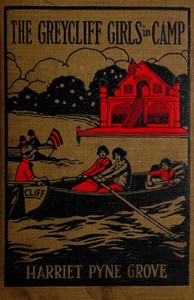
The Greycliff Girls in Camp
Edition facts
The Greycliff Girls in Camp opens not with a campfire but with a meticulously planned railway journey. The narrative devotes its first chapter to the logistics of the trip from Cincinnati to Merrymeeting Camp in Maine, detailing reservations, baggage calls, and the itinerary of sights—Niagara, Toronto, the St. Lawrence. This emphasis on organized travel establishes a pattern: the camp experience is framed by schedules and systems, from the July tournament schedule posted in the club house to the assignment of every girl to a team. Yet within this structured framework, the text repeatedly allows space for informal, unscripted moments, particularly through the girls' spontaneous observations of birds and nature.
Athletic Competition and Its Counterpoints
The excerpts reveal a camp life governed by athletic tournaments—tennis, baseball, basketball, volley ball—with teams named after Maine rivers (Kennebecs, Pennacooks, Ossipees). The narrative records scores, captains, and the "very human desire to excel." Yet it also undercuts the intensity: "There was not the intense excitement or the temptation to over-strain that there is sometimes in the games between schools." This moderation is a deliberate tonal choice. The tennis match between Lilian and Cathalina is framed not by rivalry but by mutual concern about beating each other. Cathalina worries Lilian "will hate to beat me and won’t play your best," and Lilian insists they both play "level best." The competition is real but softened by friendship, a pattern that recurs throughout the camp's activities.
Nature as a Narrative Layer
Bird life provides a running commentary on human events. During a baseball game, a red-eyed vireo "had not stopped rooting for both sides" and an olive-sided flycatcher "inquired which side beat." Hilary interprets these birds as spectators, a whimsical device that blends nature observation with camp banter. The setting is described with specificity: the "back water of the Kennebec," Sunset Rock, the pine grove, the birches. These place names ground the story in a real geography. The narrative voice shifts between the girls' dialogue and descriptive passages that note the "cool Maine breeze" or the shade of bushes and trees. This dual attention—to both the human drama and the natural environment—creates a layered texture where the camp is as much a place of trees and birds as of tennis courts and club houses.
Voice and Dialogue as Characterization
The dialogue carries much of the characterization. Hilary's exclamation, "I’ll simply pass away if we can’t" beat the Ossipees, is a period-appropriate hyperbolic style. The girls address each other by first names or nicknames (Lil, Cathie), and their speech is peppered with exclamations: "My, it’s hot this morning in the sun," "Rah, rah, Lil!" The banter is light but purposeful. When Cathalina calls herself "a lazy-bones," she acknowledges a trait that the narrative elsewhere suggests is part of her character. The author uses dialogue to advance both plot and personality without heavy exposition. The conversations about tennis matches, thirst, and team assignments feel natural to the setting, and they reveal the social dynamics—who is captain, who are champions, who plays with whom—without overt narration.
Readers approaching The Greycliff Girls in Camp will find a story that balances the order of schedules and tournaments with the spontaneity of nature and friendship. The narrative rewards attention to its small details: the way a bird is described as rooting for a team, the careful naming of trees and paths, the polite negotiations between competitors. These elements, rather than dramatic plot twists, give the book its texture. The camp is a place where systems and informality coexist, and the pleasure lies in watching how the girls navigate both.