1

The mysterious tramp — Text and Context
(0 User reviews)
1439
Project Gutenberg
2024
Not confirmed
Adventure stories; Brothers -- Juvenile fiction; Tramps -- Juvenile fiction; Kidnapping victims -- Juvenile fiction; Cub Scouts -- Juvenile fiction
Readers of public-domain and historical texts
Project Gutenberg digital edition
en
Edition facts
Words
31,477
Reading time
137 min
Text sections
33
For The mysterious tramp — Text and Context, the stored edition analysis reports 31,477 words, 2 hr 17 min estimated reading time, and 33 detected text sections.
The text analysis averages about 14.6 words per sentence, while the detected sections provide another way to judge how the source is divided.
Project Gutenberg metadata also associates the work with “Adventure stories,” connecting these edition facts with the source record’s subject description.
Source:
Project Gutenberg record #73787
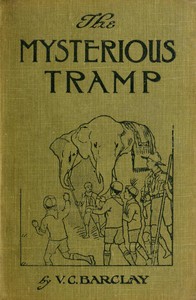
Vera C. Barclay's 1920 adventure follows three brothers—David, Bill, and Nipper—and a Cub Scout pack as they aid a mysterious tramp searching for his kidnapped daughter. The story blends scouting lore, suspense, and colloquial dialogue, with a focus on resourcefulness and loyalty.
Read the complete public-domain text at its original source.
Read on Project GutenbergThe opening chapter of The Mysterious Tramp establishes its tone through a domestic quarrel: three brothers in a night nursery, lit only by firelight, argue after a beating. David and Bill have received a dozen strokes each; Nipper, the youngest, boasts of escaping punishment by stepping on their grandfather's corn and throwing the birch out the window. His tears, he insists, are not from the beating but from something else—a secret he refuses to share. This scene immediately signals Barclay's interest in sibling dynamics, stubborn pride, and the coded loyalties of childhood. The dialogue is brisk and colloquial, with phrases like “bleat like that” and “fat-heads” marking the boys' voices as distinct from adult speech. The firelight, described as casting “strange black shadows on the ceiling,” creates a mood of secrecy and tension that will recur throughout the narrative.
Dialogue as Character Marker
Barclay differentiates her young characters primarily through how they speak. David, the eldest, uses imperatives and mockery: “For goodness’ sake stop that beastly sniveling.” Bill is less defined in the excerpts, but Nipper—the youngest—delivers a long, defensive speech full of practical cunning: “I trod hard on grandfather’s worst corn, and that made him drop the birch. I jolly soon picked it up, and threw it out of the window.” His vocabulary mixes childish petulance (“cry-cry-cry baby”) with shrewd observation. Later, when Danny (a Cub Scout) encounters the kidnapped Mariette, her speech shifts between wistful recollection (“full of fairies, they were!”) and terrified urgency (“don’t leave me, don’t leave me!”). The tramp himself, though not quoted at length in the excerpts, is described as telling a story that prompts Danny’s promise to help. Barclay uses dialogue not only to advance the plot but to signal each speaker’s age, temperament, and emotional state without authorial commentary.
The Role of the Cub Scout Pack
The story is steeped in the language and rituals of early twentieth-century scouting. Chapter titles such as “The Law of the Wolf Cub Pack” and “A Wolf Cub Council” indicate that the boys operate within an organized framework of promises and codes. Danny, the protagonist, acts as a detective and rescuer, drawing on skills implied by the pack structure. When he is captured by Black Bill, his first thought is not escape but staying to help Mariette: “his one thought was to stay and help Mariette.” This selflessness aligns with the scout-like ethos of duty and loyalty. The pack itself becomes a collective rescue force, as later chapters like “The Cubs to the Rescue” suggest. Barclay, who was a noted figure in the Scout movement (she wrote the official Wolf Cub handbook), weaves these principles into the adventure without making them didactic. The boys’ resourcefulness—knowing “every gap and short cut”—is presented as natural competence rather than lesson-learning.
Setting and Atmosphere in Key Scenes
Barclay uses setting to heighten suspense and reflect emotional states. The opening nursery is defined by its limited light: “the red glow of the fire, and the occasional flickering light of a little yellow flame.” This creates an intimate, confined space for the brothers’ conflict. Later, Danny’s nighttime journey through fields and lanes is rendered in tactile detail: “Over rough ground they went, along lanes, across ploughed fields. Every now and then Danny was lifted up and pitched roughly over a gate, or dragged through a hedge.” The physical discomfort underscores his helplessness. The empty house where he is imprisoned is identified by sound and smell: “his feet resounded with a hollow sound as he walked over a wooden floor” and “the musty, close smell.” These sensory details—firelight, rough ground, hollow footsteps, musty air—anchor the adventure in a tangible world, making the peril feel immediate. The moonlit vision of Mariette’s “golden curls shining in the moonlight” offers a brief, fairy-tale contrast to the gritty captivity.
Narrative Structure and Pacing
The book’s 27 chapters, averaging just over 1,100 words each, suggest a brisk, episodic structure. The excerpts show a pattern of short scenes that end on notes of tension or revelation. Chapter I ends with Nipper’s secret withheld; Chapter IX, “The Coming of the Mysterious Tramp,” presumably introduces the central plot. The rescue attempt in the later excerpt builds quickly: Danny finds Mariette, plans an escape, is seized by Black Bill, tied, blindfolded, and led away—all within a few pages. Barclay favors direct action over extended description. Dialogue carries much of the narrative load, and paragraphs are short. The frequent chapter breaks create natural pausing points, suitable for serial reading or younger audiences. The author also uses chapter titles as mini-spoilers or hooks: “Danny finds Mariette—and is Kidnapped” tells the reader what to expect, while “The Rescue of Danny” promises resolution. This transparent structure prioritizes forward momentum over surprise, aligning with the adventure genre’s conventions.
Readers approaching The Mysterious Tramp should attend to how Barclay balances the Cub Scout framework with genuine peril. The tramp’s backstory, Mariette’s captivity, and Black Bill’s menace are treated seriously, yet the boys’ competence and the pack’s solidarity ensure that danger never overwhelms the story’s adventurous spirit. The colloquial dialogue and brisk pacing make this a swift, engaging read, while the period details—birch rods, corn, caravans, and hay harvests—anchor it in a specific historical moment. For those interested in early children’s adventure fiction or the literary expression of the Scout movement, this title offers a compact example of both.
That old tramp’s quiet, stubborn hope reminds me of another wanderer’s tale, where boys face a haunted place with the same practical courage. Both books understand that loyalty isn’t loud; it’s the steady hand in the dark. I’ve shelved The Golden Boys at the Haunted Camp — Context and Discussion beside it for years, and they seem to murmur to each other about steadfast hearts.
There are no reviews for this eBook.
There are no comments for this eBook.
Reader reflection
Before you leave, reflect on the book
Use these questions to collect your thoughts before moving on.
Your progress
0
/
10
2
How did the book work for you overall?
3
How likely are you to recommend this book?
4
How demanding did the text feel?
5
How did the reading compare with what you expected?
6
How did the pace of the book feel?
7
How strongly did the book affect you emotionally?
8
Did it raise ideas you would like to talk about?
9
What did this book teach you most?
10