1

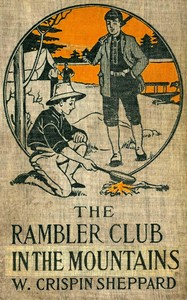
The Rambler club in the mountains — A Closer Reading
(0 User reviews)
1452
Project Gutenberg
2022
Not confirmed
Friendship -- Juvenile fiction; Camping -- Juvenile fiction; Boys -- Societies and clubs -- Juvenile fiction; Mountaineering -- Juvenile fiction; Oregon -- Juvenile fiction
Readers of public-domain and historical texts
Project Gutenberg digital edition
en
Edition facts
Words
52,611
Reading time
229 min
Text sections
7
This digital edition of The Rambler club in the mountains — A Closer Reading is described by source-level measurements including 52,611 words, 3 hr 49 min estimated reading time, and 7 detected text sections.
The text analysis averages about 12.1 words per sentence, while the detected sections provide another way to judge how the source is divided.
Project Gutenberg metadata also associates the work with “Friendship -- Juvenile fiction,” connecting these edition facts with the source record’s subject description.
Source:
Project Gutenberg record #69054
An editorial note examining W. Crispin Sheppard's authorial choices in diction, dialogue, and description in this 1910 boys' adventure novel, where the Rambler Club faces dangers in the Oregon mountains.
Read the complete public-domain text at its original source.
Read on Project GutenbergW. Crispin Sheppard opens The Rambler Club in the Mountains with a brisk, declarative line—"Well, boys, here we are at last!"—spoken by Bob Somers. This direct address immediately establishes a tone of camaraderie and sets the scene at a small Oregon railroad station. The author's descriptive choices, such as "columns of brownish smoke and jets of dazzling white steam," ground the narrative in sensory detail, while the dialogue reveals character through colloquialisms like "By jinks" and "suffering catfish." Sheppard balances action with natural description, using the lake's "black" water and "star-studded sky" to create an atmosphere of both adventure and unease.
Dialogue as Characterization
Sheppard differentiates his young characters through their speech patterns. Sam Randall's persuasive "Be a sport" contrasts with Tom's defensive retort, "Who said anything about being afraid?" The exchange reveals Tom's pride and Sam's boldness without explicit narration. Later, Mr. Fenton's formal phrasing—"I suppose I must plead guilty to having made a blunder"—marks him as an adult outsider, distinct from the boys' slangy banter. The author uses dialogue to advance the plot: Sam's suggestion to investigate the distant light leads directly to the collision with Mr. Fenton's rowboat, showing how conversation drives action.
Descriptive Economy in Setting
Sheppard paints the Oregon wilderness with selective, functional details. The "thickly-wooded shore of Hemlock Island" and "lofty crags of Promontory" are named but not overdescribed, leaving room for the reader's imagination. Night scenes rely on contrasts: the "dazzling white steam" of the train versus the "blacker than a stack of black cats" darkness of the lake. The bonfire on the bluff becomes a recurring visual anchor, described as "burning brighter than ever" and "a good-sized blaze." These details serve the plot—the light motivates the boys' nighttime excursion—while also establishing the remote, perilous setting.
Voice and Narrative Distance
The third-person narrator stays close to the boys' perspective, using phrases like "the Ramblers gave a lusty shout" and "Tom, despite his words, felt many misgivings." This limited omniscience allows readers to infer emotions without direct statement. Sheppard occasionally inserts authorial asides, such as "the younger member of the Rambler Club shook his head," which subtly guide interpretation. The narrative voice remains consistently brisk, matching the adventure genre's expectation of forward momentum. Dialogue tags like "observed Sam" and "echoed Tom" are plain, keeping focus on the spoken words rather than elaborate attribution.
Structural Pacing Through Excerpts
The opening chapter moves rapidly from arrival to action: within a few pages, the boys spot a mysterious light, debate a nighttime sail, launch the boat, and nearly collide with Mr. Fenton. Sheppard uses short paragraphs and frequent line breaks to maintain pace. The collision scene is handled with precise verbs—"shot out," "swung the helm hard down," "grated past each other"—that convey urgency without melodrama. The chapter ends with Mr. Fenton's evasive answer about the bonfire, creating a small mystery that propels the reader forward. This efficient structure, evident even in excerpts, suggests a writer skilled at balancing exposition with incident.
Readers attentive to Sheppard's craft will notice how he layers character, setting, and plot through lean prose and natural dialogue. The excerpts reveal an author who trusts his young audience to infer tension from understatement—a bonfire unexplained, a boat appearing out of darkness. This editorial note encourages a close reading of how Sheppard's choices in diction and description build the world of the Rambler Club, one that rewards attention to the specific, the colloquial, and the deliberately left unsaid.
Reading The Rambler Club in the Mountains again, I kept noticing how Sheppard lets the wilderness speak in short, practical sentences, as if the boys’ courage is a quiet thing. It made me think of Peggy McQueen, whose strength also hides in understatement. There’s a similar gentleness between the lines, a respect for hard journeys. It’s a fragile link, but for those who notice such rhythms, Young Peggy McQueen — A Reader’s Guide feels like a familiar echo.
There are no reviews for this eBook.
There are no comments for this eBook.
Reader reflection
Record your reading impressions
A brief reflection can help important ideas stay with you longer.
Your progress
0
/
10
2
Was reading this book enjoyable?
3
Would you encourage someone else to read it?
4
How much effort did this book require?
5
Did you relate to its people, ideas, or situations?
6
Could you apply anything you learned?
7
How would you rate its originality?
8
How clearly were the main ideas presented?
9
What is the main idea you are taking away?
10