1

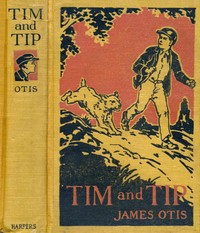
Tim and Tip — Background and Themes
(0 User reviews)
142
Project Gutenberg
2024
Not confirmed
Dogs -- Juvenile fiction; Conduct of life -- Juvenile fiction; Children -- Conduct of life -- Juvenile fiction; Boys -- Juvenile fiction; Bears -- Juvenile fiction; Hunting stories; Ship captains -- Juvenile fiction; Death -- Juvenile fiction; Aunts -- Juvenile fiction; Hunting -- Juvenile fiction
Readers of public-domain and historical texts
Project Gutenberg digital edition
en
Edition facts
Words
43,977
Reading time
192 min
Text sections
19
The catalog record for Tim and Tip — Background and Themes provides practical reading context through 43,977 words, 3 hr 12 min estimated reading time, and 19 detected text sections.
The text analysis averages about 27.1 words per sentence, while the detected sections provide another way to judge how the source is divided.
Project Gutenberg metadata also associates the work with “Dogs -- Juvenile fiction,” connecting these edition facts with the source record’s subject description.
Source:
Project Gutenberg record #74436
An editorial note on James Otis's 1883 children's adventure, focusing on the narrative voice, shifts in pacing, and the interplay between domestic threats and wild escapades, as seen in the opening advertisement and the bear-hunt preparations.
Read the complete public-domain text at its original source.
Read on Project GutenbergThe novel opens not with a scene but with an advertisement: Captain Rufus Babbige offers a reward for the return of a runaway boy and his yellow dog. This notice, read aloud to the dirty-faced Tim, immediately establishes a world where children are treated as property and punishment is routine. The voice that follows is colloquial and direct, with Tim’s choked sob and the man’s blunt commentary setting a tone of precariousness. The narrative then shifts abruptly to the comic chaos of a bear-hunt planned by boys, where weapons are improvised from fire-crackers and stones, and the dog Tip must be carried or leashed to prevent him from eating the bears before the hunters arrive. This juxtaposition—between the grim advertisement and the farcical hunt—reveals a story that oscillates between real danger and childish adventure.
Voice and the Threat of Authority
The opening chapter introduces a narrative voice that is both sympathetic to Tim and unsparing about his situation. The advertisement is read aloud by a man who is not named, but his tone is teasing: “you see that Rufe Babbige don’t intend to let you get away as easy as you thought.” Tim’s reply—that his guardian wished he would die—is delivered in a choked sob, and the narrator reports it without sentimentality. The whip marks mentioned in the frontispiece caption are never described in the excerpt, but the threat of violence is palpable. The voice stays close to Tim’s perspective, using phrases like “the sob of terror which would rise in his throat,” but it does not linger. The pace is brisk, moving from the advertisement to the conversation without dwelling on emotion. This efficiency suggests a narrative more interested in action than in psychological depth, yet the cruelty of the adult world remains a constant undertone.
Pacing and the Bear-Hunt Sequence
The bear-hunt episode, drawn from later in the book, shows a marked shift in pace. The prose becomes rapid and detailed, cataloguing each boy’s weapon: Bill’s knife that can shave a shingle, Bobby’s musket loaded with fire-cracker powder and stones, Tim’s pistol examined with comic ignorance. The dialogue is quick and argumentative, with Bobby scornfully correcting Bill’s suggestion to carry Tip: “How do yer s’pose he could smell out the tracks if we didn’t let him run on the ground?” The pacing mimics the boys’ excitement, with short sentences and exclamations. The rope solution is proposed and debated in a few lines, and the hunt is about to begin. This section contrasts sharply with the opening’s grimness; the danger is now absurd, the weapons harmless, and the greatest fear is that Tip might eat the bears before the boys can shoot. The narrative voice here is indulgent, treating the boys’ seriousness with gentle irony.
Recurring Details and Structural Rhythm
Two recurring details anchor the story: the dog Tip and the threat of adult punishment. Tip is described in the advertisement as “a yellow dog, with a long body, short legs, and a short tail,” and he appears in the hunt as the indispensable bear-scenting asset, needing to be restrained. The dog is both a companion and a plot device, his presence driving the boys’ plans. Meanwhile, the threat of Captain Babbige and Aunt Betsey’s whippings, mentioned in the first chapter, is never far away. The rhythm of the excerpts alternates between scenes of confinement or fear and scenes of wild, unsupervised play. The advertisement is a trap; the hunt is an escape. This structural pattern—from danger to farce and back—suggests a book that uses adventure as a release from oppression, but the excerpts do not reveal whether Tim ever truly escapes. The narrative maintains a careful balance between the real and the ridiculous.
Readers should attend to the way James Otis modulates his tone: the same author who writes a child’s terror of a whip also writes a debate over how to keep a dog from eating bears before the hunt begins. The excerpts do not show the resolution of Tim’s flight or the fate of Tip, but they do reveal a story that treats its young protagonists with a mixture of sympathy and amusement. The language is plain, the action quick, and the threats—both real and absurd—are never far apart.
I remember sitting on the porch swing, trying to read through the bear-hunt preparations, but my mind kept drifting back to the domestic threats between the lines. It reminded me of how the quiet tensions in Grace Harlowe's Overland Riders at Circle O Ranch — A Reader’s Guide lingered with me long after the saddle creaks faded. Some stories feel more like weather than narrative.
There are no reviews for this eBook.
There are no comments for this eBook.
Reader reflection
What was your reading experience?
Capture what you thought, learned, and would like to remember.
Your progress
0
/
10
2
How much did you enjoy the reading experience?
3
Is this a title you would suggest to others?
4
How easy was the book to follow?
5
How did the pace of the book feel?
6
Could you see yourself revisiting this book?
7
Could you apply anything you learned?
8
Did any part of the book feel personally relevant?
9
In one sentence, what did you learn?
10