1

The Motor Boys on the Pacific; Or, the Young Derelict Hunters — Themes and Context
(0 User reviews)
2324
Project Gutenberg
2004
Not confirmed
Mystery and detective stories; Motorboats -- Juvenile fiction; Swindlers and swindling -- Juvenile fiction; Automobile racing -- Juvenile fiction; Derelicts -- Juvenile fiction; Railroad travel -- Juvenile fiction
Readers of public-domain and historical texts
Project Gutenberg digital edition
en
Edition facts
Words
51,624
Reading time
225 min
Text sections
32
This digital edition of The Motor Boys on the Pacific; Or, the Young Derelict Hunters — Themes and Context is described by source-level measurements including 51,624 words, 3 hr 45 min estimated reading time, and 32 detected text sections.
The text analysis averages about 13.2 words per sentence, while the detected sections provide another way to judge how the source is divided.
Project Gutenberg metadata also associates the work with “Mystery and detective stories,” connecting these edition facts with the source record’s subject description.
Source:
Project Gutenberg record #5004
This editorial note examines how the catalog subjects of mystery, motorboats, and swindling align with the opening chapters of Clarence Young's 1906 adventure. The excerpts show a story more focused on the boys' reactions to bad news, their motorboat's destruction in a train wreck, and a fog-bound outing with female companions than on detective work or derelict hunting.
Read the complete public-domain text at its original source.
Read on Project GutenbergThe catalog subjects for The Motor Boys on the Pacific promise mystery, motorboats, swindling, automobile racing, derelicts, and railroad travel. Yet the opening chapters—the only portions excerpted here—dwell on something else: a telegram announcing the destruction of the boys' motor boat, the Dartaway, in a train wreck. Jerry Hopkins's exclamation, “Well, she is smashed this time, sure!” sets a tone of personal loss rather than adventure. The boys do not immediately pursue a derelict or confront a swindler; instead, they react to bad news, discuss the telegram, and later find themselves adrift in fog with young women named Rose, Olivia, and Nellie. The promised hunt for a derelict is deferred, and the mystery elements remain latent.
Bad News Before Adventure
The story begins not with action but with a reaction. Jerry holds a telegram, not a letter, and his repeated synonyms for destruction—“busted, wrecked, demolished, destroyed, slivered to pieces”—emphasize the emotional impact. The boys crowd around him, and the dialogue focuses on the fate of the Dartaway, their motor boat. This opening suggests that the narrative prioritizes the characters' relationships to their possessions and each other over immediate plot propulsion. The catalog subject “Motorboats -- Juvenile fiction” is present, but the boat is already lost, shifting attention to how the boys cope with the loss and what they will do next. The preface confirms that the Dartaway was destroyed in a train wreck, linking the catalog subject “Railroad travel -- Juvenile fiction” to a specific event, though the excerpts do not depict the wreck itself.
Fog, Food, and Female Companions
Later in the excerpts, the boys are on a motor boat called the Ripper with Rose, Olivia, and Nellie. They become lost in fog, and the scene turns to practical concerns: navigation, hunger, and social dynamics. Bob, called “Chunky,” produces sandwiches and cake he bought earlier, and the group makes a “merry meal.” The fog lifts temporarily, then closes in again, and Jerry steers cautiously. The dialogue includes warnings about rocks and tides from the girls, who are not merely passive passengers. This section has no mystery, no swindler, no derelict. It is a social outing with mild peril. The catalog subject “Derelicts -- Juvenile fiction” is not yet evident; the only hint of the promised hunt is in the preface, which states the boys will search for “a mysterious derelict.” The excerpts show a story that meanders through everyday concerns before reaching its advertised plot.
What the Catalog Omits
The catalog subjects list “Mystery and detective stories” and “Swindlers and swindling,” but the excerpts contain no detective work, no clues, and no swindler. The only named adult besides the professor is Mr. Blowitz, mentioned in passing as someone the boys had chocolate with. The preface introduces Professor Snodgrass and his search for a horned toad, a detail absent from the catalog. The story's structure, as seen in the table of contents, includes chapters like “A Strange Conversation,” “A Queer Story,” and “A Mysterious Influence,” which may deliver the promised mystery, but the excerpts do not reach them. Readers expecting a tight mystery or a swindler-focused plot from the catalog will find the opening chapters more concerned with character banter, food, and navigation. The catalog's emphasis on “Motorboats” and “Derelicts” is accurate in the long term, but the early pages suggest a slower, more social narrative.
Readers approaching The Motor Boys on the Pacific through its catalog subjects should expect a gradual unfolding. The mystery and derelict-hunting do not dominate the opening; instead, the story establishes the boys' personalities, their friendships, and their immediate problems. The excerpts offer a glimpse of the series' style: dialogue-driven, with frequent attention to food and practical details. The promised adventure is coming, but the book takes time to get there.
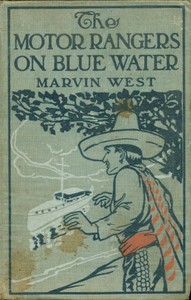
That rain kept drumming against the window while the boys lost their motorboat to the train wreck, and I felt oddly settled by their calm. Later, the fog-bound outing stirred a similar quiet patience in me. It nudged me toward another old volume, The Motor Rangers on Blue Water; or, The Secret of the Derelict — Reading Companion, which felt less like a next step and more like the same slow tide turning.
There are no reviews for this eBook.
There are no comments for this eBook.
Reader reflection
What was your reading experience?
Capture what you thought, learned, and would like to remember.
Your progress
0
/
10
2
How did the book work for you overall?
3
Would you pass this book on to a friend?
4
Did the language feel accessible?
5
Did this book create an emotional response?
6
Would this book work well in a reading group?
7
How clear did the writing feel?
8
Did anything about the book feel genuinely new?
9
In one sentence, what did you learn?
10