1

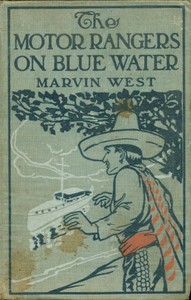
The Motor Rangers on Blue Water; or, The Secret of the Derelict — Reading Companion
(0 User reviews)
1217
Project Gutenberg
2022
Not confirmed
Sea stories; Adventure stories; Boats and boating -- Juvenile fiction; Schooners -- Juvenile fiction; Derelicts -- Juvenile fiction
Readers of public-domain and historical texts
Project Gutenberg digital edition
en
Edition facts
Words
53,314
Reading time
232 min
Text sections
5
Before opening The Motor Rangers on Blue Water; or, The Secret of the Derelict — Reading Companion, the edition data offers a quick orientation: 53,314 words, 3 hr 52 min estimated reading time, and 5 detected text sections.
The text analysis averages about 16.4 words per sentence, while the detected sections provide another way to judge how the source is divided.
Project Gutenberg metadata also associates the work with “Sea stories,” connecting these edition facts with the source record’s subject description.
Source:
Project Gutenberg record #67899
This editorial note examines the language, narrative voice, and shifts in pace in John Henry Goldfrap's 1911 adventure, focusing on the opening trail ride, the encounter with the derelict schooner, and the use of stuttering dialogue to characterize Ding-dong Bell.
Read the complete public-domain text at its original source.
Read on Project GutenbergThe Motor Rangers on Blue Water opens not at sea but on a steep, rugged trail descending toward Santa Inez, with the Pacific glimpsed through redwood trunks. The prose immediately establishes a leisurely, descriptive pace: squirrels and blue-jays flee at the sound of boyish voices, and the riders are too occupied to hunt. This unhurried rhythm, punctuated by the characters' banter, contrasts sharply with later scenes of sudden crisis.
The narrative voice shifts between omniscient exposition and dialogue-heavy exchanges. A notable feature is the stuttering speech of Ding-dong Bell, rendered phonetically ("Y-y-y-y-you've go-go-got acres of f-f-f-faith"), which adds a distinct oral texture. The author uses this quirk for both humor and tension, as when Ding-dong's stammered suggestion of a leak is immediately dismissed by Joe's laughter.
Pacing from Trail to Tide
The opening chapter moves at a deliberate, almost scenic pace, with the party riding in single file and exchanging lighthearted remarks. The prose lingers on descriptions of the landscape and the characters' attire—Nat Trevor in a "jaunty sombrero with a leather band." This calm is broken when the schooner Island Queen appears, flying its ensign upside down. The narrative accelerates: Captain Akers's exclamation ("Good gracious!") and the sudden shift to a "dead calm" create a palpable change in tempo. The author uses short, urgent sentences ("Look!" cried Cal; "What could it mean?") to heighten suspense. The transition from the trail's tranquility to the sea's mystery is abrupt, mirroring the boys' own shift from leisure to peril.
Voice and Dialogue as Characterization
Dialogue carries much of the characterization. Nat Trevor speaks with earnest confidence ("Captain Akers would not disappoint me, I know"), while Joe Hartley is pragmatic and quick to joke. Ding-dong Bell's stutter is not merely a quirk but a narrative device: his hesitant speech often introduces key observations, such as the possibility of a leak, which others dismiss. Captain Akers's voice shifts from avuncular to commanding when danger arises ("there's some terrible secret aboard that schooner, and I'm going to find out what it is"). The author also uses dialect for Captain Nelsen ("She's as preddy a liddle ship as der 'Nettie Nelsen'"), adding variety. The collective voice of the boys—"We certainly do"—reinforces their unity and American identity.
Recurring Details and Structural Echoes
Certain details recur to build atmosphere. The "blue, sparkling glint of the Pacific" in the first paragraph is echoed later by the "glassy calm" that becalms both vessels. The figurehead of the Island Queen—"a woman apparently holding a trident aloft"—is described with precision, hinting at a classical or mythical motif. The schooner's name and the upside-down flag are noted twice, reinforcing their symbolic weight. The author also repeats the motif of sound: the initial intrusion of boyish voices into the forest is mirrored by the "long-drawn-out scream" from the derelict, which "struck a chill to all their hearts." These echoes create a cohesive sensory world, even as the setting shifts from land to sea.
Readers attentive to Goldfrap's manipulation of pace will notice how the narrative slows to a crawl during moments of observation—the description of the Island Queen's details, the flapping sails—only to snap back into action with a cry or a command. The stuttering dialogue of Ding-dong Bell rewards close reading, as his halting lines often carry crucial information. Approach the text as a study in contrasts: the leisurely trail ride versus the urgent sea rescue, the clear day versus the fog of mystery.
There’s something gentle about the way Goldfrap lets Ding-dong Bell’s stammer slow a chase scene, like a held breath. Reading that companion note, I kept thinking how old books hide their tenderness in rough places. It reminded me of another quiet wreck I once drifted through, The Wreck — Inside the Classic, which understands that same strange patience.
There are no reviews for this eBook.
There are no comments for this eBook.
Reader reflection
What was your reading experience?
Capture what you thought, learned, and would like to remember.
Your progress
0
/
10
2
Was reading this book enjoyable?
3
Would you pass this book on to a friend?
4
How much effort did this book require?
5
How useful were the ideas in this book?
6
Was the book moving at the right speed?
7
How original did the book feel?
8
Did you relate to its people, ideas, or situations?
9
What did this book teach you most?
10