1

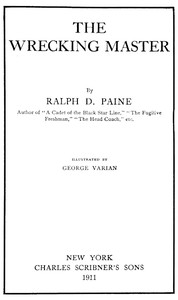
The Wrecking Master — Reading Companion
(0 User reviews)
77
Project Gutenberg
2020
Not confirmed
Sea stories; Adventure stories; Ships -- Juvenile fiction; Salvage -- Juvenile fiction; Florida -- Juvenile fiction
Readers of public-domain and historical texts
Project Gutenberg digital edition
en
Edition facts
Words
39,192
Reading time
171 min
Text sections
5
For The Wrecking Master — Reading Companion, the stored edition analysis reports 39,192 words, 2 hr 51 min estimated reading time, and 5 detected text sections.
The text analysis averages about 18.0 words per sentence, while the detected sections provide another way to judge how the source is divided.
Project Gutenberg metadata also associates the work with “Sea stories,” connecting these edition facts with the source record’s subject description.
Source:
Project Gutenberg record #62176
Ralph D. Paine's 1911 sea adventure follows young Dan Frazier, a deck-hand on the tug Resolute, as he claims salvage rights to a wrecked steamer on the Florida Reef. The narrative moves between Pensacola harbor, the tug's voyages, and the stranded Kenilworth, using recurring images of darkness, fog, and racing sails to build tension around Dan's struggle to hold the wreck against rival wreckers.
Read the complete public-domain text at its original source.
Read on Project GutenbergThe opening chapter of The Wrecking Master drops the reader into a thick Pensacola night, where Captain Jim Wetherly growls through the wheel-house window at his nephew Dan Frazier. The dialogue is immediate and salty, establishing a working relationship that shifts between uncle-and-nephew familiarity and shipboard discipline. Paine wastes no time in setting the scene: the tug Resolute has just towed a dismasted bark into port, and the crew is eager to refuel and head back to Key West. The darkness is described as “as black as the face of a Nassau pilot,” a simile that ties the local setting to the characters' experience.
From this cramped harbor beginning, the story quickly expands to the open Gulf and the Florida Reef, where Dan's dream of finding an abandoned ship becomes a tense reality. The structure alternates between the tug's bustling activity and the lonely vigil on the wrecked steamer Kenilworth, creating a rhythm of motion and stillness that mirrors the ebb and flow of salvage work.
Darkness and Visibility as Dramatic Tools
Paine repeatedly uses conditions of poor visibility—thick nights, fog, and haze—to heighten uncertainty and danger. The opening line, “A thick night and no mistake, Dan,” sets a pattern: characters grope through darkness, rely on sound and instinct, and often misjudge distances. When Dan later watches from the Kenilworth’s bridge, he scans the horizon for smoke or sails, but the weather conspires to hide his enemies until they are almost upon him. The Bahama schooners appear as “flecks of cloud” that gradually resolve into hulls, a visual trick that delays recognition and amplifies Dan’s helplessness. This motif of obscured sight is not merely atmospheric; it drives the plot by forcing characters to act on incomplete information, whether navigating a crowded harbor or guessing the intentions of approaching vessels.
The Tug as a Character in Motion
The Resolute is more than a setting; its behavior and limitations shape the story’s rhythm. Paine gives the tug a personality through its crew’s comments and its physical responses: it “felt her way” up the harbor, it “likes best plenty of sea-room with a wreck piled hard and fast on the Florida Reef.” The vessel’s movements—towing, racing, anchoring—create a pulse of exertion and pause. When Dan is left alone on the Kenilworth, the absence of the tug’s familiar vibration and the sound of its engine becomes a palpable silence. The tug’s absence is as significant as its presence; Dan’s vigil is measured by how long it will take Captain Jim to bring the Resolute back. This dependence on a single, overworked machine gives the salvage operation a fragile, improvised quality.
Dan’s Vigil and the Weight of Responsibility
Dan Frazier’s isolation on the wrecked steamer forms the emotional core of the excerpts. Paine devotes careful attention to Dan’s physical and mental state: he is “too weary in body and mind to roam,” rigs a makeshift awning, and lies gazing through rents in the canvas. The description of his dream—a “salt-water background” fantasy of finding an abandoned ship—is undercut by the reality: “the lone hero had an elephant on his hands.” The narrative shifts between Dan’s internal calculations (how long before Captain Jim returns? will the Bahama schooners arrive first?) and his external observations of the sea. This alternation creates a claustrophobic tension, as Dan is trapped on a stationary vessel while the world moves around him. His authority as “wrecking master” is purely nominal, dependent on the absent uncle’s reputation and the goodwill of Key West.
Rival Wreckers and the Race for Salvage
The arrival of the Bahama schooners introduces a new layer of conflict. Paine describes them with a mix of admiration and menace: they come “with great speed and showing a reckless spread of canvas,” their low hulls gleaming beneath “towering piles of sail.” Dan immediately identifies them as pirates who “have got a clear field for once.” The race is not just physical but legal—whoever boards the wreck first can claim salvage rights. Dan’s plan to “stay aboard until Captain Jim should return” is a desperate gamble, and the narrative leaves him hiding on the bridge, outnumbered and outgunned. The scene echoes earlier moments of navigation in darkness: Dan must again act on incomplete knowledge, guessing the schooners’ intentions while hoping for rescue. This recurring pattern of waiting and watching, of motion seen but not yet reached, gives the story a taut, episodic structure.
Readers should pay attention to how Paine uses the physical details of ships—their rigging, speed, and handling—to convey character and conflict. The Resolute’s grumbling engine, the schooners’ “reckless spread of canvas,” and the wreck’s silent cargo all carry narrative weight. The story’s movement between cramped wheel-houses, open decks, and the exposed bridge of a stranded steamer creates a geography of tension. Watch for how the author balances Dan’s youthful ambition with the practical limits of his situation, and how the sea itself—dark, foggy, or glittering with sails—becomes an active participant in the drama.
The rain kept time against the window while Dan Frazier held his lamp against the Florida dark, and afterward I found myself thinking how young men in old books keep chasing what the sea takes. That afternoon, some quiet thread pulled me toward The Motor Boys on the Pacific; Or, the Young Derelict Hunters — Themes and Context, another foggy coast, another stubborn claim on loss.
There are no reviews for this eBook.
There are no comments for this eBook.
Reader reflection
How did this book work for you?
Your answers remain private and are stored only in this browser.
Your progress
0
/
10
2
What was your overall reaction to the book?
3
Would you recommend this book to another reader?
4
What was the reading difficulty like?
5
Do you expect to return to this book?
6
How did the pace of the book feel?
7
Would this book work well in a reading group?
8
How useful were the ideas in this book?
9
What is the main idea you are taking away?
10