1

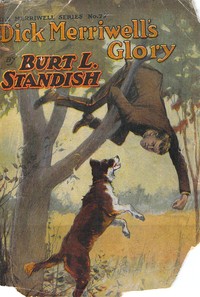
Dick Merriwell's Glory; Or, Friends and Foes — A Reader’s Guide
(0 User reviews)
1041
Project Gutenberg
2020
Not confirmed
Adventure stories; Football -- Juvenile fiction; Boarding schools -- Juvenile fiction; Dime novels; Merriwell, Frank (Fictitious character) -- Juvenile fiction; Merriwell, Dick (Fictitious character) -- Juvenile fiction
Readers of public-domain and historical texts
Project Gutenberg digital edition
en
Edition facts
Words
72,394
Reading time
315 min
Text sections
31
The catalog record for Dick Merriwell's Glory; Or, Friends and Foes — A Reader’s Guide provides practical reading context through 72,394 words, 5 hr 15 min estimated reading time, and 31 detected text sections.
The text analysis averages about 13.3 words per sentence, while the detected sections provide another way to judge how the source is divided.
Project Gutenberg metadata also associates the work with “Adventure stories,” connecting these edition facts with the source record’s subject description.
Source:
Project Gutenberg record #62411
This editorial note examines the tension between loyalty and betrayal in Burt L. Standish's Dick Merriwell's Glory, focusing on the covert scheming of Lynch and Scudder, the spycraft of Old Joe Crowfoot, and the strategic use of disguise and signals in the football subplot.
Read the complete public-domain text at its original source.
Read on Project GutenbergIn Dick Merriwell's Glory; Or, Friends and Foes, Burt L. Standish builds suspense through a network of secret plans and hidden listeners. The excerpt reveals two distinct layers of deception: the plotting of Lynch and Scudder to steal Fardale's new football formation, and the unexpected presence of Old Joe Crowfoot, who overhears their scheme from beneath a pile of leaves. This double concealment—conspirators unaware they are being spied upon—creates a pattern of nested surveillance that recurs throughout the narrative.
The football play, described as a "new formation" that "will make other teams look sick," becomes a McGuffin driving the antagonists' actions. Standish contrasts the open, athletic competition on the field with the covert maneuvers off it, suggesting that the true contest is not merely between teams but between integrity and treachery.
The Language of Secrecy and Suspicion
Standish uses a vocabulary of whispers, hints, and half-spoken plans to create an atmosphere of mistrust. Lynch and Scudder speak in short, clipped exchanges: "Somebody must find out the signals." "And then——" "Post the other team." The dashes and ellipses imply unspoken agreements and dangerous knowledge. Scudder's refusal to "take the chances" and his later private muttering—"I don't trust you"—reveal that even among co-conspirators, loyalty is fragile. The narrative voice reinforces this by describing the hollow where they meet as "deserted" and the leaves as "gathered thickly," a natural cover for duplicity.
Old Joe Crowfoot as a Narrative Device
The emergence of Old Joe Crowfoot from the leaf pile is a striking moment of dramatic irony. The reader learns that the villains' plot has been overheard, but the characters remain ignorant. Standish describes Crowfoot's eyes as "small, keen, coal-black" and his emergence as a "gentle upheaval," emphasizing his stealth and patience. This character functions as a silent witness, a figure who observes without intervening—at least in this scene. His single utterance, "Ugh!" and the guttural grunt, mark him as an outsider to the cadets' world, yet he holds the power of knowledge. The narrative does not reveal his intentions, leaving the reader to wonder whether he will act as a helper or a threat.
Disguise and False Identity in the Football Plot
Lynch's absence from school and his return as "H. T. Lincoln, Philadelphia, Pa." introduces a motif of false identity. The alias is thin—a simple reversal of initials and a generic city—but it suffices in a small town where strangers are noticed. The letter he receives, bearing only "This afternoon, half-past four. Come," suggests a prearranged signal system. When Lincoln/Lynch asks for "Elmer Tyke," the cadets' ignorance of that name hints that Tyke may be another alias or a minor figure. Standish layers these deceptions: the football play itself is a kind of disguise, a trick meant to "paralyze" opponents. The line between legitimate strategy and cheating blurs as the antagonists seek to "blank" the new play by stealing its secrets.
Readers attentive to the interplay of open and hidden action will find that Standish rewards careful observation. The football field is not the only arena of conflict; the woods, the hotel, and the academy grounds all become stages for espionage. Pay attention to who overhears whom, and note how the author uses natural details—leaves, wind, shadows—to signal the presence of concealed observers. The story's moral geometry becomes clearer when one tracks the flow of information and the characters' varying degrees of trust.
There is something touching, across a century, in how young Dick Merriwell's careful signs and loyal disguises echo the quieter stratagems of boys in that older classroom, ten years before steam trains. Both books whisper that friendship hides its work in small gestures. I often set them near each other on my cart, School-days in 1800 — A Closer Reading beside the old sporting tale, each warming the other's spine.
There are no reviews for this eBook.
There are no comments for this eBook.
Reader reflection
How will you remember this book?
Save your reaction, strongest insight, and memorable passage.
Your progress
0
/
10
2
What was your overall reaction to the book?
3
Would you recommend this book to another reader?
4
How easy was the book to follow?
5
How much did the book move you?
6
Did you relate to its people, ideas, or situations?
7
Was the book what you thought it would be?
8
How valuable was this book for your own interests?
9
Which lesson or insight stayed with you?
10