1

Princess Polly's Gay Winter — Themes and Context
(0 User reviews)
295
Project Gutenberg
2004
Not confirmed
Friendship -- Juvenile fiction; Girls -- Juvenile fiction; Students -- Juvenile fiction; Elementary schools -- Juvenile fiction
Readers of public-domain and historical texts
Project Gutenberg digital edition
en
Edition facts
Words
33,112
Reading time
144 min
Text sections
4
The source record for Princess Polly's Gay Winter — Themes and Context measures this digital text at 33,112 words, 2 hr 24 min estimated reading time, and 4 detected text sections.
The text analysis averages about 16.4 words per sentence, while the detected sections provide another way to judge how the source is divided.
Project Gutenberg metadata also associates the work with “Friendship -- Juvenile fiction,” connecting these edition facts with the source record’s subject description.
Source:
Project Gutenberg record #6584
This editorial note examines how Amy Brooks structures 'Princess Polly's Gay Winter' through seasonal movement, domestic interiors, and recurring images of cats and cozy treats, focusing on the transition from summer at 'The Cliffs' to winter in Avondale.
Read the complete public-domain text at its original source.
Read on Project GutenbergThe opening chapter of Princess Polly's Gay Winter immediately establishes a pattern of movement between two homes: the summer residence 'The Cliffs' and the winter home in Avondale. Rose Atherton's reflection that 'wherever Uncle John is, seems better than anywhere else' anchors the emotional geography of the story. The transition is marked by packing treasures, a motor journey, and Rose's anticipation of seeing 'sweet Princess Polly' next door. This seasonal shift is not merely a change of setting but a structural device that frames the narrative, as the title itself promises a winter of gaiety.
Movement Between Homes as Structural Frame
The narrative opens with Rose sitting on the piazza steps, contemplating Avondale's beauty and recalling the summer at 'The Cliffs.' The journey from shore to inland is described in detail: packing 'those treasures that Uncle John held dearest,' motoring in a 'big, luxurious car,' and Rose's repeated attempts to 'guess' the new home's appearance. This movement is not a one-time event; the text later references a return to the shore in a 'breath of the sea' chapter, suggesting a cyclical pattern. The homes themselves are contrasted—'The Cliffs' as a 'delightful summer home' versus Avondale as 'more grand, more beautiful' than dreamed. This binary structure of summer/winter, shore/inland, gives the story a clear rhythmic pulse.
Domestic Interiors and Cozy Gatherings
Interior scenes are rendered with attention to sensory details that create a snug atmosphere. At Aunt Judith's party, the children sit 'watching the dancing flames' while listening to tales of adventure. The 'simple, old-time treat' includes sandwiches cut in fancy shapes, dainty cakes, and 'tiny wine glasses filled to the brim with delicious raspberry shrub.' The maid Greta appears in a 'striped gown and kerchief,' adding a quaint visual. These gatherings serve as set pieces where social bonds are reinforced—Polly, Rose, and Sprite are noted as 'the most favored of all the little lassies.' The party scene ends with the children walking home together 'talking all the way of the kindness of Aunt Judith,' emphasizing community warmth.
Recurring Animal Imagery: Cats and Gyp
Animals appear as markers of domestic comfort and character. The dainty Angora cat is introduced early: 'her tail like a great plume, her soft coat as fluffy as thistle down.' The housekeeper notes the cat's immediate sense of home—'she made herself at home, and seemed at home the first day.' Later, the boy Gyp is described as an 'impish figure' sitting astride an old wooden pump, waiting to see Aunt Judith. His odd seat and direct manner contrast with the refined cat. Gyp's concern about the nuts he provided—'I wanted ter know if them nuts was any good?'—shows a rough but earnest character. These animal and human figures alike underscore themes of belonging and eccentricity.
Dialogue and Voice: Directness and Formality
The characters' speech patterns reveal social dynamics. Rose's thoughts are often spoken aloud: 'And we live in the finest part of Avondale,' she says, continuing her thoughts aloud. Uncle John uses affectionate, formal address: 'I've something to tell you, my little girl.' The children's collective exclamations—'So do I!' cried the others, as if with one voice—create a chorus of enthusiasm. Gyp's dialect is markedly different: 'That's what I came fer.' This contrast between polished and rustic speech highlights class and character differences. The narrative voice itself is omniscient but gentle, often using phrases like 'she wondered if there were, in all the world, a lovelier spot' to align with the child's perspective.
Readers attentive to structure will notice how Brooks uses seasonal markers—the move from summer to winter, the cozy indoor parties, the recurring motif of the cat—to unify the episodic chapters. The excerpts suggest a book that values domestic stability and friendship over plot-driven adventure. Approach the text as a series of vignettes held together by place and recurring images, rather than a tightly plotted narrative.
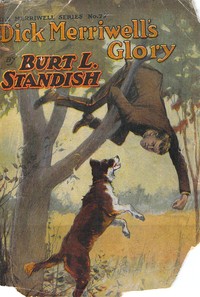
I keep thinking about how Princess Polly's Gay Winter wraps its warmth around you through cheese dreams and purring cats, the house shrinking snug against the snow. That quiet, domestic steadiness reminds me of the sturdiness in Dick Merriwell's Glory; Or, Friends and Foes — A Reader’s Guide, where friendship feels like a hearth left burning through the harder chapters.
There are no reviews for this eBook.
There are no comments for this eBook.
Reader reflection
Before you leave, reflect on the book
Use these questions to collect your thoughts before moving on.
Your progress
0
/
10
2
Did this book hold your interest?
3
Would you encourage someone else to read it?
4
How much effort did this book require?
5
How distinctive were its ideas or approach?
6
Did you gain anything practical from the text?
7
Which aspect of the book did you value most?
8
How personally connected did you feel to the book?
9
Which lesson or insight stayed with you?
10